How to Choose the Right Wire Management System?
Choosing the right wire management system is more than hiding cables behind a desk or inside a cabinet. It affects safety, maintenance, airflow, and the useful life of connected equipment. A suitable solution keeps power cords, data cables, and control wires organized without creating sharp bends or excessive pressure.
Every installation has different demands. A server room may require ladder racks, flame-resistant materials, and clear separation between power and communication lines. A home office may need a simple cable tray, adhesive clips, or a flexible sleeve. In a manufacturing area, dust, vibration, moisture, and frequent movement can change the decision completely. The best wire management approach starts with the environment, not the product label.
Measure the cable quantity and route length carefully. Leave room for future additions. Small details matter. Check load capacity, bend radius, mounting strength, and access for repairs. Products should come from reputable manufacturers, with clear specifications and relevant safety testing for the intended market. Local electrical requirements still matter, even when a product appears professionally made.
There is no perfect system. A low-cost option may work today, then fail when one more cable is added. I have seen neat installations become difficult to service because every wire was tightly bundled. Appearance matters, but accessibility matters more. The final choice should balance protection, flexibility, cost, and long-term maintenance. A thoughtful system may look slightly less uniform, yet perform far better over time.
Define the Purpose and Requirements of the Wire Management System
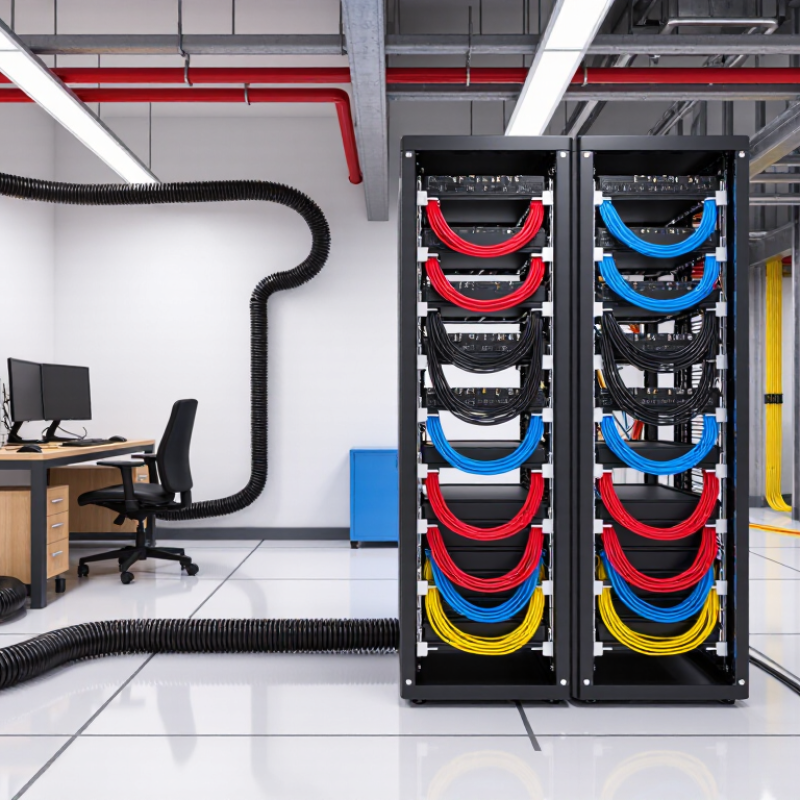
Before choosing a wire management system, define what the cables must do. A server room needs orderly routing, airflow protection, and quick access during maintenance. An office may need simple under-desk channels and safe separation from power cords. Outdoor installations require resistance to moisture, sunlight, temperature changes, and physical impact. The right system begins with the environment, not its appearance.
Measure the cable quantity, diameter, bend radius, and expected growth. A tray that fits today may become crowded within months. Leave practical space for new cables and repairs. Check mounting surfaces, load capacity, cleaning routines, and access frequency. In real projects, technicians often value tool-free access more than perfect symmetry. I once underestimated future expansion, and the neat installation became difficult to service. That mistake still influences my planning.
Tips: Sketch the cable paths before buying materials. Mark power, data, and control lines separately. Confirm the manufacturer’s load and temperature ratings. Avoid tight bends and sharp edges. Test a small section first. It may reveal awkward access, weak supports, or unwanted cable movement. Record measurements and installation conditions, because memory is not a reliable specification. Review the plan with the person who will maintain the system, not only the person who installs it.
Compare Common Wire Management System Types and Materials
Choosing a wire management system starts with the environment, not appearance.
Grand View Research estimated the global cable management market at about USD 23.3 billion in 2023. Its forecast also indicates continued growth through 2030. That growth reflects expanding electrical, industrial, and data infrastructure needs.
Cable trays Cable trays suit large cable groups and allow quick visual inspection. Perforated steel trays provide strength and ventilation. Aluminum trays reduce weight and resist corrosion, but they can cost more.
Conduit Conduit offers stronger physical protection, especially in exposed areas. Metal conduit handles impact and heat well. PVC conduit is lighter and resists moisture, although high temperatures can limit its use.
Raceway systems Raceway systems work neatly along walls and under desks. They are practical for offices, but crowded raceways can restrict cooling and future changes.
Material selection should follow load, temperature, moisture, and maintenance requirements. IEC 61537 covers cable tray and cable ladder systems, including mechanical and electrical performance considerations. The National Electrical Contractors Association’s labor studies also show that installation access strongly affects project productivity.
Easy access matters more than many teams expect.
I still see projects choosing narrow trays to save space. That shortcut can create difficult upgrades later. Cable fill, bend radius, grounding, and separation should be checked before installation.
Small details matter. A sleeve may organize low-voltage cables, while a grounded metal pathway may better protect sensitive circuits from interference.
The best choice is rarely the cheapest product; it is the system that remains accessible, stable, and suitable after years of service.
Evaluate Cable Capacity, Layout, and Installation Conditions
How to Choose the Right Wire Management System?
Choosing a wire management system starts with cable capacity, not appearance. Count current cables and allow room for future additions. A crowded channel traps heat and makes troubleshooting frustrating. Check each cable’s bend radius, especially near sharp turns and entry points. I have seen neat layouts fail because installers measured the straight run but ignored the corner space. That mistake is easy to repeat.
Layout should support clear routes, safe separation, and simple access. Keep power and signal cables apart when interference may affect performance. Mark both ends of important cables before installation. Review the route against doors, moving equipment, and service panels. A drawing can look perfect, yet a nearby hinge may crush the cable after repeated movement. Leave practical access for inspection and replacement.
Tips: Measure the longest route twice. Test the proposed path with a few sample cables. Check heat, moisture, dust, vibration, and available mounting surfaces. Select materials suitable for the environment, and verify installation details against applicable electrical requirements. Do not fill every opening. Empty space is useful. It reduces pressure, improves airflow, and leaves room for changes. My own preference is to document one unused route, although that can feel wasteful during installation. Future work often proves its value.
How to Choose the Right Wire Management System?
Evaluate cable capacity, layout, and installation conditions before selecting a conduit, trunking, or cable tray. The chart shows standard maximum conduit fill limits based on the number of conductors.
Selection guidance: A single conductor may occupy up to 53% of conduit area, two conductors up to 31%, and three or more conductors up to 40%. Allow additional space for future cables, pulling access, bend radius, heat dissipation, and installation complexity. Always confirm the final design against applicable local electrical codes.
Check Safety, Accessibility, and Maintenance Requirements
Choosing a wire management system begins with safety, not appearance. Inspectors should check conductor ratings, heat exposure, bend radius, and separation from power sources. A cable tray that looks orderly can still trap heat. The National Fire Protection Association’s NFPA 70B emphasizes documented, condition-based electrical maintenance, especially in complex facilities. Use that principle during selection.
Accessibility matters during faults and upgrades. Technicians should reach labels, connectors, and isolation points without moving an entire cable bundle. Uptime Institute’s 2024 Annual Outage Analysis identified power issues as the leading cause of reported data-center outages. That finding makes clear routing and fast inspection practical safety controls, not cosmetic improvements. Leave spare capacity, too. Crowded channels often become unserviceable within months.
Maintenance requirements should be written before installation. Specify inspection intervals, cleaning methods, permissible load changes, and replacement procedures. The International Electrotechnical Commission’s IEC 60364 series supports clear separation, protection, and maintainability in low-voltage installations. In practice, I prefer removable covers and durable identification tags. Adhesive labels alone often fail in dusty or humid rooms. I have also seen teams overestimate future capacity. That mistake deserves a second review. A simple maintenance trial can expose blocked access, sharp edges, or confusing routes before the system becomes difficult to change. (Sources: NFPA 70B, 2023; Uptime Institute, Annual Outage Analysis 2024; IEC 60364 series.)
Select the Best System for Cost, Durability, and Future Expansion
How to Choose the Right Wire Management System?
The lowest purchase price rarely creates the lowest total cost. Installation time, access, replacements, and future modifications matter just as much. A basic cable tray may suit a small office, while a covered conduit system can better protect wiring in dusty or damp spaces. Measure cable volume carefully, then allow room for airflow and maintenance. I usually recommend reserving 25 to 30 percent spare capacity. My early estimates were too optimistic, and crowded channels became difficult to service.
Durability depends on more than material thickness. Check load ratings, mounting strength, bending limits, and resistance to heat or moisture. Sharp edges can damage insulation during installation. Smooth interiors and secure fasteners reduce that risk. In active work areas, choose covers that open easily without special tools. This saves labor during inspections. Test a sample section before ordering the full system. Small defects become expensive across a large installation.
Future expansion should influence the layout from day one. Leave accessible routes near equipment that may grow, and document every cable path with clear labels. Modular sections can reduce disruption when new circuits are added. However, adding capacity everywhere can waste money and space. Review expected growth with the facilities team, not just the installer. A practical system balances today’s budget with tomorrow’s access, protection, and working time. Trade-offs remain. That is where careful judgment matters.
How to Choose the Right Wire Management System? - Select the Best System for Cost, Durability, and Future Expansion
Comparison of common wire management systems for commercial, industrial, data, and infrastructure installations
| System Type | Typical Applications | Indicative Installed Cost (USD/ft) |
Durability (1–5) |
Expansion (1–5) |
Installation Characteristics | Maintenance Access | Best Selection Criteria |
|---|---|---|---|---|---|---|---|
| Wire Mesh Cable Tray | Data centers, telecommunications rooms, low-voltage networks, and short overhead runs | $12–$35 | 4 | 5 | Lightweight and fast to cut, route, and install; requires suitable supports and bonding where required | Excellent; cables can be added or removed from the open top without threading through a closed raceway | Choose when rapid installation, ventilation, visibility, and frequent cable changes are important |
| Ladder Cable Tray | Industrial facilities, power distribution, manufacturing areas, and long overhead cable routes | $18–$55 | 5 | 5 | Strong structure for large or heavy cable bundles; needs accurate support spacing and adequate clearance | Excellent; open construction provides easy inspection, cable separation, and future additions | Choose for heavy loads, long spans, high heat dissipation, and major future capacity requirements |
| Solid-Bottom Cable Tray | Power, control, instrumentation, and installations requiring greater cable protection | $20–$60 | 5 | 4 | Provides continuous support and improved shielding from falling objects; may require covers in harsh areas | Very good; accessible from above, although cable additions may require more routing preparation | Choose when mechanical protection, cable support, and reduced exposure to debris are priorities |
| Electrical Conduit | Outdoor areas, exposed industrial locations, underground routes, and circuits requiring strong protection | $10–$40 | 5 | 2 | Provides enclosed protection but requires precise bending, fittings, pulling space, and compliance with local codes | Limited; adding or replacing cables can require pulling equipment and available spare capacity | Choose for impact, moisture, chemical, ultraviolet, or tamper protection rather than frequent expansion |
| Surface-Mounted Raceway | Offices, retail spaces, laboratories, renovations, and areas where wall access is limited | $8–$25 | 3 | 4 | Fast to install with minimal wall disruption; appearance and available internal capacity must be considered | Good; removable covers allow relatively easy access for low-voltage and branch-circuit wiring | Choose for retrofit projects, visible installations, moderate cable volumes, and easy reconfiguration |
| Underfloor Cable Management | Raised-floor data centers, control rooms, trading floors, and flexible office environments | $20–$60 | 3 | 5 | Uses floor voids, trays, baskets, or modular channels; planning must account for airflow, access, and floor loading | Very good where removable floor panels are available; access depends on room layout and installed equipment | Choose when floor-level flexibility, frequent moves, and concealed routing are more valuable than low initial cost |
| Cable Trunking | Commercial buildings, plant rooms, vertical risers, and installations needing separated cable compartments | $15–$45 | 4 | 4 | Enclosed or partially enclosed sections provide organized routing and optional separation for power and data | Good; removable lids provide access, but high cable fill can make additions more difficult | Choose when clean appearance, cable segregation, and moderate environmental protection are required |
Related Posts
-
How to Choose the Best Cable Management Solutions for Your Space?
-

How to Choose the Best Cable Management Solutions for Your Home Office
-
What is Cable Management Systems? Benefits and Best Practices Explained
-

How to Improve Wire Management in Your Workspace?
-

How to Choose the Best Cable Management Systems for Your Home?
-

What is Cable Management Systems and Why Are They Important?