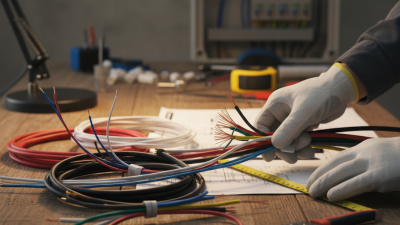
Top 10 Types of Cable and Wire for Electrical Projects?
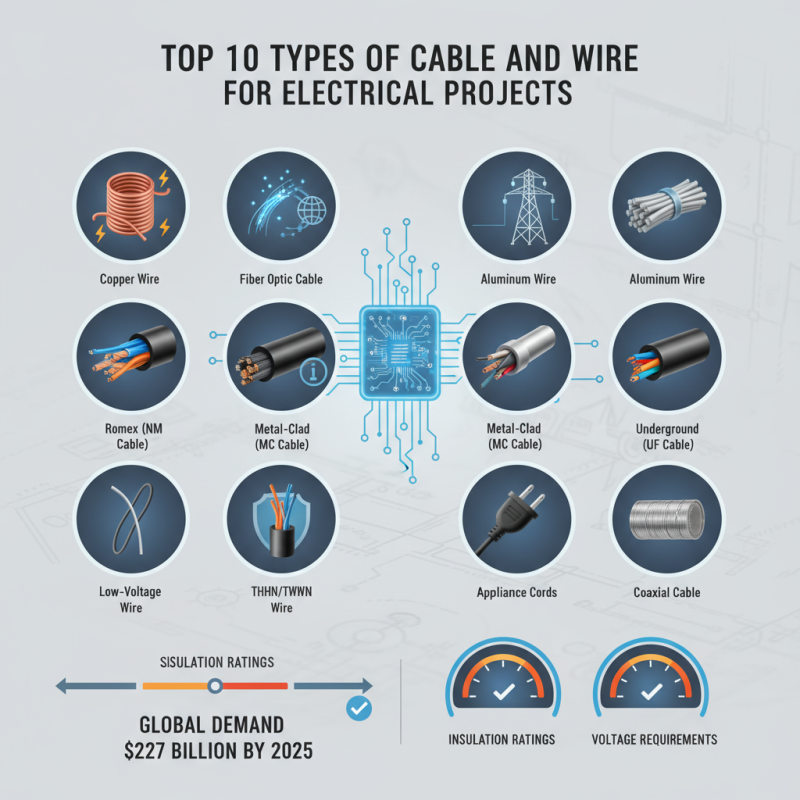
When approaching electrical projects, choosing the right cable and wire is critical. According to the National Electrical Manufacturers Association (NEMA), the global demand for electrical wire and cable is projected to reach $227 billion by 2025. This emphasizes the importance of selecting suitable types for various applications.
Wire and cable serve as the lifeline of electrical systems. Different projects require specific types. For example, copper wires are preferred for their conductivity. In contrast, aluminum wires are lighter and often used in transmission. Additionally, specialty cables, like fiber optic, are crucial for high-speed data transfers. Without proper selection, projects can face inefficiencies and increased safety risks.
Understanding cable and wire options is fundamental. Many may overlook the importance of insulation ratings and voltage requirements. A mismatch can lead to premature failure or hazard. As we delve into the top ten types of cable and wire for electrical projects, keep these critical aspects in mind. They are not merely technical specifications; they ensure safety and performance in our electrifying world.
Types of Electrical Cables: An Overview of Common Varieties
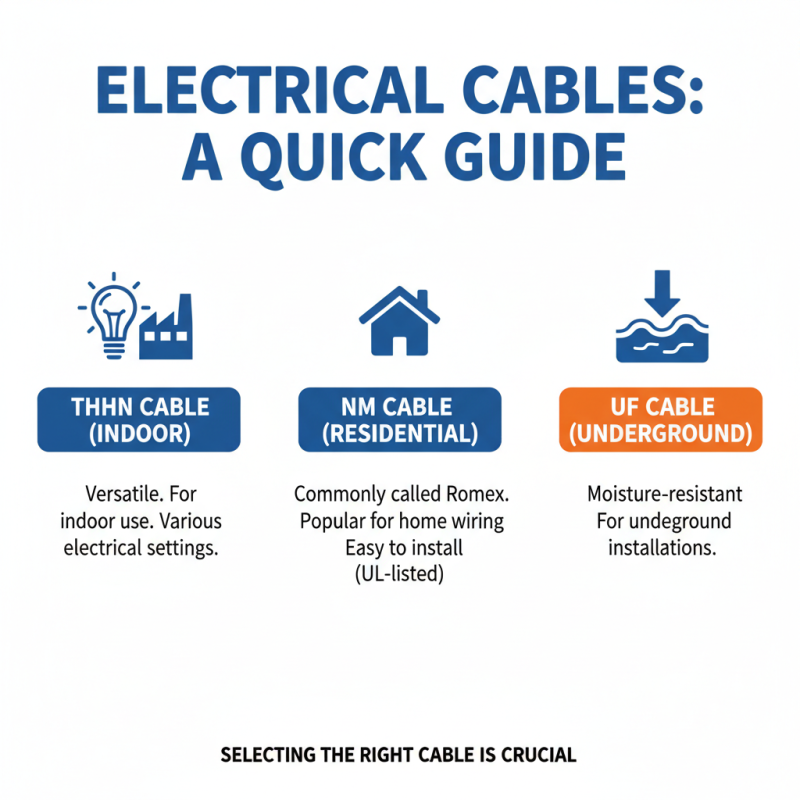
When working on electrical projects, selecting the right type of cable is crucial. Different applications require different cables, each with its own characteristics. Common varieties include THHN, NM, and UF cables. THHN is versatile, ideal for indoor use, and found in various electrical settings. NM cables, often called Romex, are popular for residential wiring. UL-listed, they are known for their ease of installation. UF cables work well for underground installations, as they are moisture-resistant.
Tip: Always check the voltage ratings. This ensures you use the right cable for the task. Choosing the wrong one can lead to safety hazards.
Another common type is coaxial cable, often used for TV and internet connections. It's designed to handle high-frequency signals. Then there's fiber optic cable, which is essential for high-speed internet. These cables transmit data as light, offering faster speeds and higher bandwidth.
Tip: Be cautious with installation. Improper handling can damage fiber optic cables. Avoid sharp bends and excessive pulling.
When selecting a cable, consider your project's specific needs. Each wire type serves a unique purpose. Mistakes can lead to inefficient performance or safety risks. Always consult reliable sources before making your choice. Take your time. Getting it right the first time saves effort later.
Understanding Wire Gauges: Importance in Electrical Projects
Wire gauges play a crucial role in electrical projects. They determine the amount of current a wire can safely carry. Understanding these gauges prevents overheating and potential fires. The American Wire Gauge (AWG) system measures wire thickness. For instance, a lower gauge number indicates a thicker wire. A 12-gauge wire can handle up to 20 amps, while a 16-gauge wire can manage only 10 amps.
Incorrect gauge selection can lead to serious issues. For example, using too thin a wire can result in voltage drops and reduced performance. A report from the National Fire Protection Association highlighted that improper wiring accounts for 21% of home electrical fires. Many may overlook these figures. It is essential to check wire capacity against project needs carefully.
Factors such as wire length also affect performance. Long runs may require a thicker gauge due to resistance. Not considering this can lead to unexpected surprises during projects. Additionally, the environment influences wire selection. Outdoor wiring needs resistance to moisture and temperature changes. Ignoring these details can lead to challenges down the road. Each project is unique, so understanding wire gauges is non-negotiable.
Top 10 Types of Cable and Wire for Electrical Projects
| Type of Cable/Wire | Application | Wire Gauge (AWG) | Current Capacity (Amps) | Insulation Type |
|---|---|---|---|---|
| Romex (NM Cable) | Residential Wiring | 14 AWG | 15 Amps | PVC |
| THHN Wire | Commercial Wiring | 12 AWG | 20 Amps | Nylon |
| Coaxial Cable | Cable Television | RG6 | N/A | PE |
| Cat5e Ethernet Cable | Networking | 24 AWG | N/A | PVC |
| Speaker Wire | Audio Systems | 16 AWG | N/A | PVC |
| MTW (Machine Tool Wire) | Industrial Equipment | 14 AWG | 15 Amps | Thermoplastic |
| UF Wire | Underground Service | 12 AWG | 20 Amps | Thermoplastic |
| SJOOW Cable | Portable Equipment | 12 AWG | 20 Amps | Rubber |
| Building Wire (USE) | Service Entrance | 6 AWG | 55 Amps | Cross-linked Polyethylene |
Applications of Power Cables in Residential and Commercial Settings
Power cables play a crucial role in both residential and commercial settings. They are responsible for transmitting electricity from the supply to various appliances and systems. In homes, power cables support lighting, heating, and cooling systems. A report from the International Electrotechnical Commission indicates that effective wiring can improve energy efficiency by up to 20%. This highlights the importance of choosing the right type of cable for specific applications.
In commercial buildings, power cables are integral for heavy machinery and extensive networks. Industrial environments often require robust cables that can withstand higher loads. According to the National Electrical Manufacturers Association, proper installation of these cables can enhance safety and reduce downtime. However, not all installations meet the necessary standards. Many older buildings still use outdated wiring, posing serious risks. This area needs continuous improvement and regular assessments.
Understanding the various types of cables is essential for optimal performance. For instance, armored cables provide additional protection in high-risk areas. However, their installation can be complex. More training and awareness are essential for electricians to ensure these challenges are addressed effectively. Ensuring that both residential and commercial sites are equipped with appropriate wiring remains a pressing issue in the electrical industry.
The Role of Communication Cables in Networking and Data Transfer
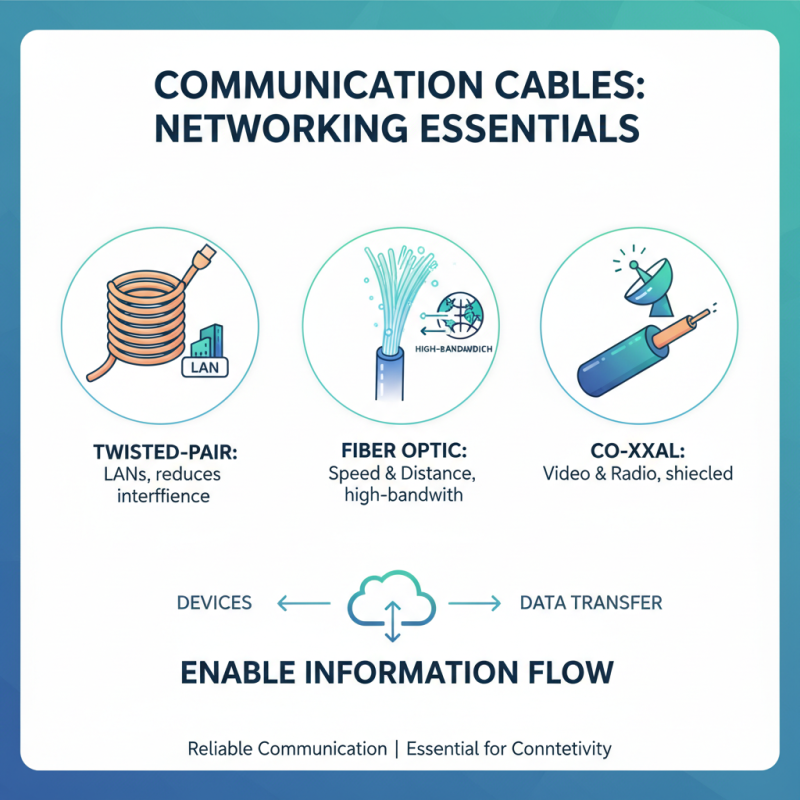
Communication cables play a vital role in the world of networking and data transfer. They enable the flow of information between devices, making them essential for reliable communication. Different types of communication cables serve various purposes. For example, twisted pair cables are widely used in local area networks (LANs) due to their ability to reduce interference. Fiber optic cables excel in speed and distance, ideal for high-bandwidth applications.
Tips: Always check cable specifications before purchasing. Different projects require different types. Understanding your needs can save money and time.
Data transfer rates depend heavily on the quality of cables used. Poor quality wires can lead to signal degradation. For instance, using lower-grade twisted pair cables may result in slower network speeds. This can be frustrating, especially in a professional setting.
Tips: Test your cables regularly. Identify any wear or damage to avoid future issues. Propagate this culture in your workspace. Awareness can lead to better performance.
Investing in the right communication cables is crucial. The right choice makes a difference, whether for home use or business. Take the time to review your options. It could lead to improved network efficiency and a smoother user experience.
Safety Standards and Regulations for Electrical Wiring Choices
When working on electrical projects, adhering to safety standards is crucial. Different regions have specific regulations regarding electrical wiring. These laws ensure that installations are safe and minimize risks of hazards. Using appropriate materials is part of compliance.
Consider local building codes before starting a project. You may find unexpected rules that affect your choices. For example, some areas may require specific insulation types for outdoor wiring. Tips: Always check for updates on regulations. Codes can change over time, and staying informed is essential for safety.
Wiring choices should align with safety standards to prevent electrical fires. Using undersized wires can lead to overheating. Select cables according to their ampacity ratings. Tips: Measure your space accurately. This helps avoid costly mistakes. Remember, it’s wise to use licensed electricians whenever possible. Their expertise ensures that your project meets all applicable codes.
Top 10 Types of Cable and Wire for Electrical Projects
Related Posts
-
How to Choose the Right Cable and Wire for Your Electrical Projects
-
What is the difference between cable and wire?
-

10 Essential Tips for Choosing the Right Custom Cable for Your Needs?
-
What is Electric Wire and Why You Need to Choose the Right Type for Your Projects
-

The Ultimate Guide to Effective Cable Management Strategies for a Tidy Workspace
-

Top Tips for Effective Wire Management Solutions?