What Is a Humanoid Robot and How Does It Work?
A Humanoid Robot is a machine designed to resemble the human body and operate in human environments. It may have a head, torso, arms, hands, and two legs. This familiar structure is practical, not merely attractive. Standard doorways, stairs, tools, and workspaces were built for people. A human-shaped robot can potentially share these spaces without major redesign. Still, appearance does not prove intelligence. A robot may look convincing and remain surprisingly limited.
Its operation depends on several systems working together. Cameras and depth sensors observe nearby objects, people, and surfaces. Microphones can detect spoken commands and environmental sounds. Software processes this information and selects an action. Electric motors, gearboxes, and actuators then move the joints. A control system constantly checks position, force, and balance. If one foot lands unevenly, the robot must adjust quickly. Otherwise, it may stumble or fall. Small corrections matter.
The most capable designs combine mechanical engineering, computer vision, artificial intelligence, and safety testing. In controlled demonstrations, a robot may walk, carry objects, or answer questions. Real workplaces are less predictable. Lighting changes, floors become wet, and objects rarely sit exactly where software expects. This creates a serious gap between laboratory success and dependable daily use. The phrase “human-like” can also mislead readers. Humanoid robots do not automatically think, feel, or understand like humans. Their abilities depend on training data, sensors, hardware, and carefully defined tasks. Progress is real, but it is uneven. Understanding how each part works helps separate useful engineering from impressive marketing.
What Defines a Humanoid Robot?
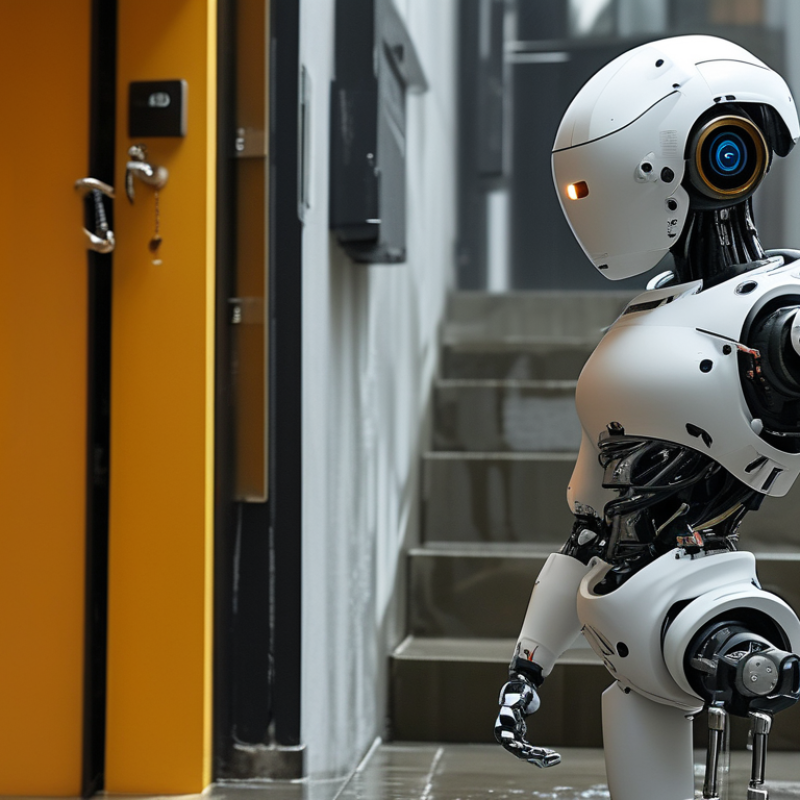
What defines a humanoid robot? It is not simply a machine with a face. A humanoid robot is designed around a human-like body plan, usually with a head, torso, two arms, and two legs. This structure helps it approach tools, stairs, doors, and workstations built for people. Human appearance alone is insufficient. A screen shaped like a person is not necessarily humanoid.
Engineers define the category through structure and function. Cameras, microphones, depth sensors, and tactile sensors help the robot interpret its surroundings. Motors and joints produce actions such as turning a handle or lifting a small box. A control system connects perception, balance, planning, and movement. When the robot walks, its software estimates foot placement and adjusts after every uneven step. The process is less graceful than many demonstrations suggest. It may hesitate, sway, or stop safely.
Humanoid form also includes proportion, joint arrangement, and interaction style. Some systems use wheeled feet or limited lower bodies, so the boundary remains debated. That is worth admitting. A strict two-legged definition may exclude useful machines designed for human environments. In practical evaluations, engineers should examine what the robot can sense, reach, carry, and repeat. Facial expressions and voices matter less than dependable performance. A humanoid robot is best understood as a human-oriented physical platform, not a mechanical imitation of a person.
The Main Body Parts and Their Functions
A humanoid robot copies the human body because familiar proportions help it use stairs, tools, and shared workspaces. Its torso holds the battery, processors, communication units, and safety circuits. The head usually contains cameras, microphones, depth sensors, and sometimes thermal sensors. These devices create a changing map of nearby people and objects. The International Federation of Robotics reported 541,302 industrial robot installations in 2023, showing how quickly automated machines are entering structured workplaces. Humanoid systems face a harder environment.
The arms provide reach and controlled force. Electric motors drive the shoulders, elbows, wrists, and fingers. Each joint uses position and torque feedback, helping the controller detect resistance before damage occurs. Hands need delicate contact sensors for gripping a paper cup or turning a small handle. The legs contain powerful hip, knee, and ankle joints. Their motion must coordinate with pressure sensors in the feet. Balance is fragile. A slight floor change can disturb the entire body.
The computer acts as the robot’s nervous system. It combines visual data, joint readings, and movement commands within milliseconds. A 2024 Goldman Sachs Research report estimated a potential humanoid robot market near 38 billion dollars by 2035, but forecasts remain uncertain. Power capacity is still a practical weakness. Heavy batteries increase operating time, yet they also add weight. Engineers therefore trade speed, strength, safety, and endurance. That trade-off is not elegant. It is real. The body may look human, while its movement still appears mechanical and occasionally hesitant.
How Humanoid Robots Sense Their Environment
What Is a Humanoid Robot and How Does It Work?
A humanoid robot senses its environment through several coordinated systems. Cameras capture faces, doors, tools, and changing light. Depth sensors estimate distance, while inertial units track balance during every step. Tactile sensors detect pressure when a hand touches a cup. Force sensors can reveal whether the cup is slipping. Small errors matter.
The International Federation of Robotics reported 541,302 industrial robot installations worldwide in 2023. This figure does not represent humanoid robots, but it shows the scale of modern robotic deployment. More machines now operate around people, where reliable perception becomes essential. Industry reports also identify sensing, mobility, and artificial intelligence as major barriers to wider humanoid adoption.
A robot combines sensor readings inside a perception system. Software filters noise, compares images with stored patterns, and builds a temporary map. It may recognize a chair, but recognition is not understanding. A shadow can resemble a step. Wet floors can distort camera readings. The robot then uses this information to plan movement and adjust its joints.
The 2024 Stanford AI Index Report documents rapid growth in artificial intelligence capability and investment. Yet better algorithms cannot replace physical evidence. A camera may see an object, while a force sensor confirms contact. That difference is practical. Current systems still struggle with cluttered rooms, reflective surfaces, and unexpected human movement. Engineers must test these weaknesses repeatedly, not hide them.
How Control Systems Turn Data into Movement
A humanoid robot uses control systems to convert raw data into coordinated movement. Cameras, depth sensors, microphones, and joint encoders constantly observe its surroundings and body position. A computer combines these signals into an estimated state. This estimate answers practical questions: Is the robot leaning? Where is the floor? Is an object within reach?
The controller then compares the desired action with the current state. To walk, it calculates foot placement, hip rotation, knee angles, and balance corrections. Electric actuators receive precise commands, while force sensors measure contact with the ground. The process repeats many times each second. Movement becomes a conversation between prediction and feedback.
It is not perfectly smooth. A loose cable, changing light, or slightly uneven tile can disturb the estimate. Control software must respond without making the correction too strong. Otherwise, a small error may become a visible wobble. Engineers test these systems with slow steps, sudden stops, and repeated arm movements. They also record failures, because a robot that succeeds once proves very little. In practice, reliable motion depends on accurate sensors, well-tuned models, and careful limits on speed and force. Some decisions still require compromise. Faster responses can create noise, while safer responses may look hesitant.
What Is a Humanoid Robot and How Does It Work?
How Control Systems Turn Data into Movement
Humanoid robots use several control layers operating at different update rates. Fast joint-servo loops stabilize motors, balance controllers respond to body motion, and slower perception and planning systems interpret the environment and select actions. These representative engineering rates show how sensor data is progressively converted into coordinated movement.
Where Humanoid Robots Are Used and What Challenges Remain
Humanoid robots combine a human-shaped body with sensors, motors, software, and artificial intelligence. Their form helps them operate in spaces built for people. A robot may carry a box, climb shallow steps, or use a door handle without major environmental changes. Cameras and depth sensors map nearby objects, while joint motors adjust balance and movement. These systems still need careful testing.
In hospitals, humanoid robots can deliver supplies, guide visitors, or support routine rehabilitation exercises. In warehouses, they may move containers and work during long shifts. Schools and museums can use them for interactive demonstrations, language practice, and accessibility support. Disaster-response teams might send them into unstable buildings to inspect rooms before people enter. The practical value is clear. However, performance depends on lighting, floor surfaces, network quality, and task complexity. A loose cable can stop an impressive demonstration.
Serious challenges remain. Walking safely around children requires fast perception and cautious decisions. Hands still struggle with soft clothing, fragile objects, and cluttered tables. Development and maintenance are expensive, especially for smaller organizations. Privacy also needs firm controls when robots record faces, voices, or indoor routines. Human supervision remains necessary, although that requirement can reduce efficiency. Another concern is social trust: people may follow a robot’s advice too easily because it appears confident. That reaction deserves more study. Humanoid design may be useful, but it is not automatically the best solution for every workplace.