China Top Wire Duct Manufacturers How to Choose?
Choosing among China’s top wire duct manufacturers requires more than comparing prices. The right supplier must balance material quality, dimensional accuracy, production capacity, documentation, and after-sales support. A low quotation can hide thin PVC walls, brittle cutting edges, inconsistent slot spacing, or weak adhesive backing.
Market reports from Grand View Research and MarketsandMarkets place the global cable management market in a strong growth cycle, driven by data centers, industrial automation, renewable energy, and commercial construction. These reports do not measure wire duct alone, but they reveal rising demand for organized, protected wiring systems. That demand also raises supplier risk. More factories are entering the market. Not every factory has equal process control.
Mike Holt, a well-known electrical safety educator, states, “Safety is not expensive, it’s priceless.” His principle applies directly to wire duct selection. Ask whether the manufacturer follows relevant requirements, such as UL 94 flame ratings, RoHS restrictions, and applicable IEC practices. Request test reports, material declarations, sample approvals, and traceable batch records. Then inspect the product physically. Check the cover fit, base rigidity, burr-free slots, and temperature resistance.
Factory experience matters. So does honest communication. A supplier that admits a limitation may be more dependable than one promising everything. This point is easy to overlook. It should not be.
A strong evaluation should compare samples under real conditions, including bending, heat exposure, repeated cover removal, and dense cable loading. China offers many capable manufacturers, but choosing well requires evidence, not polished claims.
Wire Duct Types: PVC, Halogen-Free, and Steel Options Under IEC 61084-2-1
China Top Wire Duct Manufacturers: How to Choose?
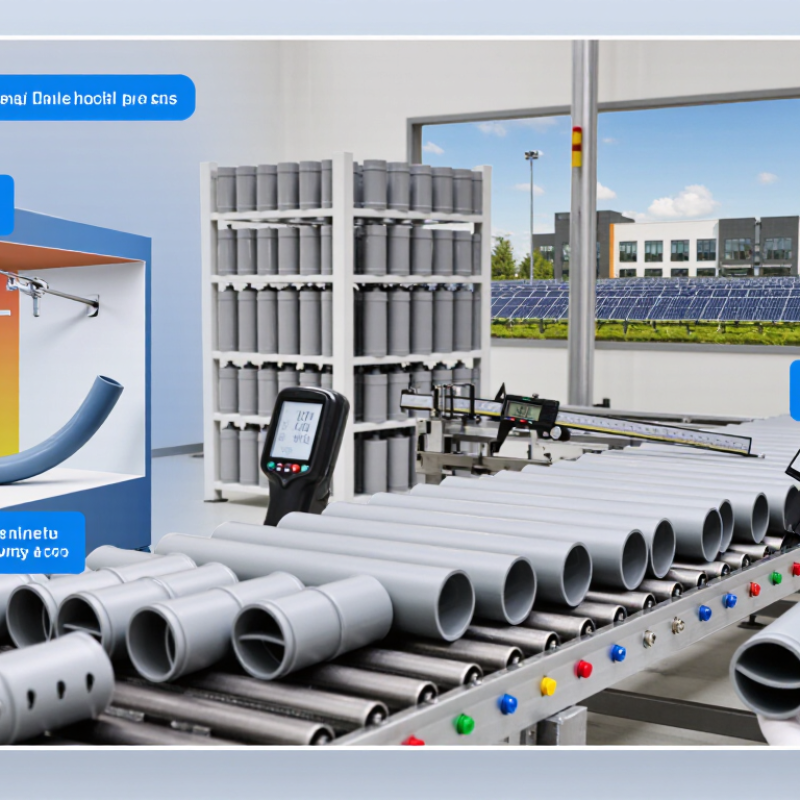
Wire duct selection should begin with the installation environment, not the supplier’s ranking. PVC ducts are lightweight, economical, and easy to cut on site. They suit many indoor control cabinets. However, heat, ultraviolet exposure, and fire conditions can limit their use. Halogen-free ducts reduce corrosive and hazardous gases during fire. They are useful in transport, public, and enclosed facilities. Still, halogen-free does not mean fireproof. Steel ducts offer stronger impact resistance and better protection near machinery. They may require corrosion-resistant coatings and proper bonding.
IEC 61084-2-1 provides a technical framework for cable trunking and ducting systems. It helps buyers review construction, mechanical strength, temperature behavior, and electrical safety. A reliable manufacturer should provide current test reports, material declarations, dimensional data, and traceable quality records. Sample ducts deserve practical inspection. Check lid retention, edge smoothness, slot consistency, and accessory fit. I have seen attractive samples fail during installation because the cover loosened under cable pressure. That small detail matters.
Tips:
Match the duct material to heat, moisture, impact, and fire risks. Ask for IEC 61084-2-1 evidence for the exact product series. Do not accept a general certificate without checking its scope. Compare samples from several manufacturers. Some specifications look excellent on paper, but field handling can expose weaknesses. Consider future cable additions, too. An overfilled duct becomes difficult to maintain and may reduce ventilation around warm conductors.
Flame Safety: Compare UL 94 V-0, V-1, and V-2 Ratings
China Top Wire Duct Manufacturers: How to Choose?
Flame Safety: Compare UL 94 V-0, V-1, and V-2 Ratings
When selecting wire duct manufacturers in China, flame safety deserves close attention. UL 94 ratings describe how plastic behaves during a controlled vertical flame test. They do not prove that a complete cable duct will resist every fire condition.
UL 94 V-0 offers the strictest performance among these three ratings. Each specimen must stop burning quickly, with no flaming drops that ignite the cotton indicator below. V-1 allows longer burning time, but flaming drops are still not permitted. V-2 has similar burning limits to V-1, yet flaming plastic drops may occur. That difference matters near insulation, dust, or other combustible materials.
Ask manufacturers for the exact UL 94 classification, tested material, color, and wall thickness. A V-0 result for a thick sample may not apply to a thinner duct. Request current laboratory reports and production samples. Check whether the cover closes securely after cutting, because open gaps can weaken practical protection. During factory evaluation, inspect uneven edges, brittle clips, and inconsistent surface texture. These details often reveal process problems.
A certificate alone is not enough. I once considered a V-0 label reassuring, but overlooked whether the report matched the supplied resin. That was a useful mistake. Reliable suppliers should explain test limits clearly, maintain batch records, and provide samples for independent verification. Choose based on documented performance and real installation conditions, not only the highest rating.
UL 94 Flame Safety Comparison: V-0, V-1 and V-2
The chart compares the maximum permitted afterflame time for one flame application and the total permitted afterflame time across ten flame applications under the UL 94 vertical burning test. V-0 and V-1 do not permit flaming drips, while V-2 permits flaming drips that can ignite the cotton indicator.
Performance Data: Check IP Ratings, Temperature Limits, and Load Capacity
China Top Wire Duct Manufacturers: How to Choose?
Performance data separates a reliable wire duct from a polished sample. Check whether the stated IP rating applies to the complete installation, not only the duct body. IEC 60529 defines IP codes: IP54 limits dust ingress and resists water splashes, while IP65 requires dust-tight protection and water-jet resistance. Seams, covers, and cable exits can weaken that result. Small details matter.
Temperature data needs equal attention. IEC 61084-1 covers cable trunking and ducting systems for electrical installations, including mechanical and thermal performance. Ask for continuous operating temperature, short-term exposure limits, and material test conditions. IEC 60216-1 evaluates thermal endurance, but its results do not automatically predict every site condition. Heat accumulates around tightly packed conductors. That assumption can fail.
Load capacity should include support spacing, test span, cable fill, and permitted deflection. A credible technical report should show the applied load and failure point, not only state “heavy duty.” IEC 61084 test information can help compare mechanical performance, although installation geometry still changes the result. In field selection, I would request photos of tested assemblies and independent laboratory records. I would also allow margin for future cables. Overlooking expansion is a common, avoidable mistake. Standards provide control, not certainty.
Supplier Qualification: Verify ISO 9001, RoHS, REACH, and Traceability
Choosing a qualified wire duct manufacturer in China requires more than comparing prices or catalog photos. Request a valid ISO 9001 certificate and confirm the certification scope, site address, and expiration date. The certificate should cover the actual factory producing your wire ducts, not only a trading office.
For RoHS and REACH compliance, ask for recent laboratory reports, material declarations, and test methods. Check whether the reports match the duct material, color, flame rating, and production batch. A supplier should explain how restricted substances are controlled during purchasing, molding, cutting, and packaging. Documents can look convincing. Verify them independently when possible.
Traceability shows how seriously a factory manages quality. Ask to see resin lot records, machine settings, inspection sheets, and packaging labels. During an audit, select one finished box and trace it back to raw materials and operators. Check measurement tools for calibration records, especially when duct dimensions affect installation. Also review complaint handling and corrective-action reports. A supplier that admits a past defect may be more reliable than one claiming perfect production. I have found that small gaps, such as missing batch codes, often reveal larger control problems. A sample inspection is useful, but it cannot replace ongoing production monitoring. Request retained samples and periodic test records before approving long-term supply.
Final Selection: Compare MOQ, Tooling, Lead Time, Samples, and Total Cost
China Top Wire Duct Manufacturers: How to Choose?
Selecting a wire duct manufacturer requires more than comparing catalog prices. In practical sourcing, MOQ often reveals production flexibility. A low MOQ can reduce inventory pressure, especially for custom colors or unusual sizes. Ask whether the quoted MOQ applies to each size, color, or order total. Request clear tooling details, including mold ownership, modification fees, and replacement costs. Small details matter.
Lead time and sample approval
Lead time should be divided into sample approval, tooling, production, and shipment. A supplier promising ten days may exclude mold preparation or inspection. Request a written schedule with realistic buffer days. Samples should match mass production materials, wall thickness, punching pattern, and surface finish. Test cutting, cover fitting, and cable installation before approval. A sample can look perfect and still fail during assembly.
Total cost includes unit price, tooling, packaging, freight, inspection, taxes, and possible rework. Compare these items in one spreadsheet, not through email fragments. I once focused too heavily on the lowest unit price and overlooked reinforced packaging. The final landed cost was higher. That mistake changed my evaluation method. Ask for production photos, measurement records, and material documentation. Confirm how defects are handled, and whether corrective actions are documented. A dependable supplier gives precise answers, even when the answer is inconvenient.