
How to Choose the Right Electric Wire for Global Sourcing?
Choosing the right electric wire for global sourcing is not simply a price comparison. It is a risk-control decision involving conductivity, insulation, voltage, temperature, fire behavior, and documentation. The International Energy Agency’s Electricity Grids and Secure Energy Transitions report estimates that 80 million kilometers of grids must be added or refurbished worldwide by 2040. That scale increases demand for dependable wire, but it also increases pressure on copper, aluminum, testing capacity, and delivery schedules. Every specification matters.
Start with the application. A flexible robotic cable needs different conductor classes than fixed building wiring. Outdoor installations may require UV resistance, water blocking, and stronger jackets. IEC 60228 can guide conductor classification, while IEC 60502-1 supports many low-voltage power-cable applications. Regional approvals still matter. UL, CSA, VDE, and other marks are not interchangeable. Nexans CEO Christopher Guerin has said, “Electrification is the most efficient way to decarbonize the world.” His point is practical: reliable electrification depends on reliable cable systems.
Ask suppliers for conductor resistance results, insulation material data, flame-test evidence, batch traceability, and factory-audit records. Confirm whether the quoted size uses copper area or an equivalent metric designation. Small differences can create large heating problems. A low price may hide thinner insulation, inconsistent stranding, or weak documentation. That happens.
The IEA’s Global Critical Minerals Outlook 2024 also highlights supply pressure surrounding copper. Buyers should therefore compare copper purity, recycled content, lead time, and substitution risks. A sourcing decision that looks efficient today may become fragile tomorrow. The strongest process combines laboratory evidence, recognized standards, supplier experience, and a realistic review of failure consequences.
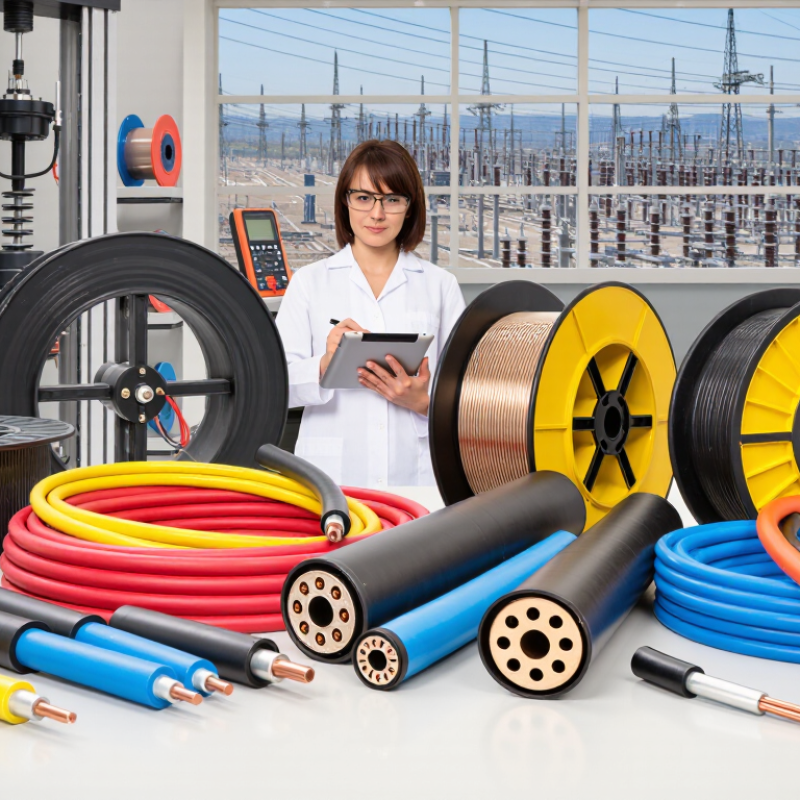
Define Electrical Load, Voltage, and Current Requirements
How to Choose the Right Electric Wire for Global Sourcing?
Before comparing wire prices, define the electrical load precisely. Record each device’s rated power, operating voltage, phase, and expected running time. A 1,000-watt load at 100 volts draws about 10 amps. At 240 volts, it draws about 4.2 amps. The difference is significant.
For alternating current, power factor can increase the required current beyond a simple watts-to-volts calculation. Motors, compressors, and transformers may also create short starting surges. Check those values, not only the label’s normal rating.
Current determines the wire’s ampacity, but installation conditions also matter. Conductor material, cross-sectional area, insulation temperature rating, ambient heat, bundling, and conduit space can change the safe capacity. Voltage drop deserves attention too.
A long cable feeding a small machine may cause weak performance, excessive heating, or failed startup. I usually calculate the longest circuit path, including the return conductor, before requesting supplier quotations. Small detail, large effect.
Sourcing teams should provide a written specification with voltage range, continuous and peak current, cable length, flexing requirements, and operating temperature. Ask for test reports and confirm the wire’s markings, conductor size, insulation type, and applicable destination-market requirements.
A neat spreadsheet can still mislead when the load data is guessed. I have seen projects select thinner wire because the average current looked acceptable. That decision ignored startup demand.
Recheck the assumptions. They are often the weakest part.
Match Wire Materials, Conductors, and Insulation Types
How to Choose the Right Electric Wire for Global Sourcing?
Global wire sourcing begins with the conductor, not the catalog photograph. Choose copper when conductivity, flexibility, and compact termination matter. Choose aluminum when lower weight and cost justify larger cross-sections. However, aluminum needs compatible terminals and careful oxide control. Do not trust color alone. IEC 60228 defines conductor classes, including solid and flexible constructions, for clearer comparisons. That matters when suppliers quote different strand counts. The International Copper Study Group reported global refined copper use above 26 million tonnes in 2023. The IEA’s Global Critical Minerals Outlook 2024 warns that announced projects may cover only 70% of 2035 copper demand. Supply assumptions deserve scrutiny.
Insulation must match heat, voltage, moisture, movement, and fire exposure. PVC is economical and widely available, but heat and chemical limits require checking. XLPE handles higher temperatures and power applications. PE suits selected communication and low-loss designs. PTFE tolerates severe heat, yet its price and processing demands complicate sourcing. Ask for continuous operating temperature, voltage rating, flame test results, and aging data. IEC 60332 tests flame propagation; it does not prove every installation is safe. That distinction is easy to miss. Request samples. Then test them under bending, stripping, crimping, and thermal cycling.
Global purchasing fails when material choice ignores the final assembly. Check conductor class, outer diameter, bend radius, and terminal compatibility before comparing prices. Require traceable test reports, batch identification, and declarations against destination-market standards. Use independent laboratory verification for critical projects. A supplier’s impressive datasheet is only a starting point. Procurement teams often find small insulation changes disrupt automated stripping. Allow tolerance. Recheck drawings after pilot production, because the cheapest wire can create the most expensive rework.
How to Choose the Right Electric Wire for Global Sourcing?
Match wire materials, conductors, and insulation types according to conductivity, weight, flexibility, and operating temperature.
Copper has approximately 100% IACS conductivity, making it suitable where compact size, low resistance, and flexibility are important.
Aluminum has approximately 61% IACS conductivity and about one-third the density of copper, helping reduce cable weight for large installations.
PVC is commonly rated at 70°C, XLPE and EPR at 90°C, while PTFE and silicone rubber support much higher operating temperatures.
Temperature values are typical continuous operating ratings. Final wire selection should also verify voltage rating, installation method, ambient temperature, mechanical requirements, and applicable international standards.
Select the Correct Wire Size, Temperature, and Flexibility
When sourcing electric wire globally, start with the load, installation method, and local electrical requirements. A wire that looks generous may still overheat inside a crowded conduit. Measure the expected current. Then check voltage drop across the full cable run, not only the first meter. Longer distances often need a larger conductor, especially for motors, heaters, and outdoor equipment. Some buyers choose by price alone. That shortcut deserves a second look.
Temperature rating must match the real environment, including heat from nearby equipment, sunlight, and enclosed spaces. An insulation rating of 90°C does not automatically permit continuous operation at 90°C. Bundled cables can require derating, while cold conditions may reduce flexibility. Destination-market requirements also matter. Ask suppliers for test reports, conductor material, cross-sectional area, and applicable certification documents. Do not rely on a translated datasheet without checking the original technical values. Small wording differences can hide large compliance problems.
Flexibility depends on strand size, insulation compound, and repeated movement. For fixed wiring, a solid or less flexible conductor may be practical. For robotics, portable tools, or moving panels, finely stranded wire usually performs better. However, extra flexibility can increase cost and complicate termination. Request samples before placing a large order. Bend them, strip them, and inspect the terminals. One sample is not proof. I have seen attractive samples fail when production batches changed. That risk should remain visible in every sourcing decision.
How to Choose the Right Electric Wire for Global Sourcing? - Select the Correct Wire Size, Temperature, and Flexibility
| Conductor Size (AWG) |
Nominal Area (mm²) |
Reference Ampacity (A) |
Typical Insulation Temperature Rating |
Flexibility Level | Typical Application | Global Sourcing Considerations |
|---|---|---|---|---|---|---|
| 14 | 2.08 | 20 | 70–105°C | Solid: low Class 2 stranded: medium |
Lighting circuits, control wiring, and small power loads | Confirm local minimum conductor size, insulation voltage rating, and installation method before ordering. |
| 12 | 3.31 | 25 | 70–105°C | Solid: low Class 2 stranded: medium |
General-purpose branch circuits and equipment wiring | A common cross-market size; specify the metric equivalent and tolerance rather than relying on AWG alone. |
| 10 | 5.26 | 35 | 70–105°C | Class 2 stranded: medium Class 5: high |
Higher-load equipment, appliances, and short feeder runs | Check conductor resistance, insulation OD, bend radius, and terminal compatibility for assembled products. |
| 8 | 8.37 | 50 | 90–105°C | Class 2 stranded: medium Class 5: high |
Feeders, industrial equipment, battery systems, and heavy-duty circuits | Verify lugs, crimp terminals, pulling tension, and heat dissipation in conduit or cable trays. |
| 6 | 13.3 | 65 | 90–105°C | Class 2 stranded: medium Class 5: high |
Industrial feeders, motor circuits, and high-current battery connections | For frequent movement, request fine-stranded construction and a tested minimum bend radius. |
| 4 | 21.2 | 85 | 90–105°C | Class 2 stranded: medium Class 5/6: high |
Large feeders, generators, motor-control equipment, and power distribution | Confirm current-carrying conductor count, ambient temperature, voltage drop, and termination temperature rating. |
| 2 | 33.6 | 115 | 90–105°C | Class 2 stranded: medium Class 5/6: high |
Main feeders, large machinery, and high-current power assemblies | Specify handling equipment, cable gland size, bend radius, and the required short-circuit withstand rating. |
| 1/0 | 53.5 | 150 | 90–105°C | Class 2 stranded: medium Class 5/6: high |
Large battery banks, switchboards, generators, and industrial distribution | Use a complete cable specification covering conductor material, insulation, shielding, terminals, and installation standard. |
- Reference ampacity values are indicative copper-conductor values at 75°C, based on typical conditions of three current-carrying conductors and 30°C ambient temperature. Apply the governing local electrical code, correction factors, voltage-drop limits, and terminal ratings.
- Wire flexibility is determined mainly by conductor construction: solid conductors are least flexible; IEC 60228 Class 2 stranded conductors are more flexible; Class 5 and Class 6 fine-stranded conductors are intended for flexible applications.
- Temperature ratings commonly include 70°C PVC insulation, 90°C thermoset or cross-linked insulation, and 105°C PVC or specialized insulation. The final rating must match the complete cable construction and certification.
- For global sourcing, specify the conductor area in mm² and AWG where applicable, copper or aluminium material, voltage rating, insulation material, temperature rating, stranding class, outer diameter, bend radius, color code, and required test standard.
- Request test documentation for conductor resistance, insulation withstand voltage, flame performance, dimensional tolerance, and material compliance. Certification requirements vary by destination market and end use.
Verify Global Standards, Certifications, and Installation Codes
How to Choose the Right Electric Wire for Global Sourcing?
Verify Global Standards, Certifications, and Installation Codes
When sourcing electric wire across borders, certification is not a decorative file. It should prove compliance for the destination market. Start with voltage, frequency, conductor size, insulation temperature, and fire performance. IEC 60228 defines conductor classes and resistance requirements. IEC 60364 guides low-voltage installation practices. National rules may still add stricter conditions.
The risk is practical. NFPA’s report, Home Fires Involving Electrical Distribution and Lighting Equipment, recorded about 35,150 U.S. home structure fires annually from 2015 to 2019. These fires caused approximately 470 deaths and 1,100 injuries each year. A wire can meet one standard and fail another installation code. Check the complete certificate scope, not only its logo. Confirm the test method, rated voltage, conductor material, insulation type, and production site.
Demand is also changing. The IEA’s Electricity 2024 report expects global electricity demand to grow by about 3.3% annually from 2024 to 2026. More projects mean more pressure on procurement teams. Ask for recent test reports from accredited laboratories, factory quality records, and batch traceability. Verify markings on the cable itself. Samples should match mass production.
I have seen paperwork look convincing. It was incomplete. Human review still matters.
Evaluate Suppliers, Testing Records, Pricing, and Shipping Conditions
Choosing the right electric wire for global sourcing requires more than comparing copper prices. In my purchasing work, a supplier once sent clean samples but delayed the full test report. That warning mattered. Ask for the factory address, production capacity, material traceability, and recent inspection records. Request records linked to the exact wire size and insulation type. A generic certificate is not enough. Watch the production line, labeling, storage, and final packing. Small details reveal weak controls.
Testing records should show conductor resistance, insulation thickness, voltage withstand, flame behavior, and aging results. Check test dates, equipment numbers, sample IDs, and reviewer signatures. Independent laboratory results add confidence, but they still need verification. Ask for a retained sample and compare it with the shipment. Spreadsheets can look perfect. Physical evidence is harder to fake.
Still, no testing system is flawless. Recheck critical batches before installation.
Pricing should include the copper basis, processing, packaging, testing, tooling, and payment terms. A low offer may hide thinner insulation or unstable material calculations. Compare like with like. Shipping conditions also deserve close attention. Confirm carton length, reel dimensions, moisture protection, loading photos, insurance responsibility, and delivery milestones. Ask what happens after a port delay. Written answers reduce disputes, though they cannot remove every risk. Leave time for inspection and contingency stock. That extra cost may prevent a larger failure.
Related Posts
-
2026 Top Electric Wire Trends for Global Buyers to Know?
-
What is Electric Wire and Why You Need to Choose the Right Type for Your Projects
-
Top 10 Tips for Choosing the Right Electric Wire for Your Next Project
-
Top Types of Electric Wire to Know for Your Electrical Projects?
-
2025 Guide: How to Choose the Right Electric Wire for Your Projects
-
How to Choose the Right Electric Wire for Your Project?