Why Choose Cable and Wire for Global Sourcing?
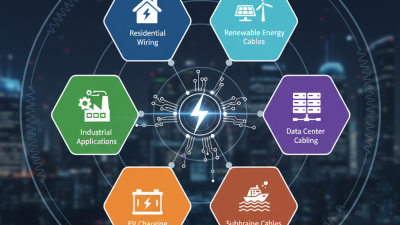
Global cable and wire sourcing is no longer a simple price exercise. It supports renewable power, data centers, electric vehicles, factories, and expanding urban grids. The International Energy Agency’s Electricity 2024 report forecasts global electricity demand growth of about 3.4% annually from 2024 to 2026. Its Grids and Secure Energy Transitions report also estimates that more than 80 million kilometers of new or upgraded grids may be needed by 2040. Every kilometer requires dependable conductors, insulation, testing, and delivery discipline.
The opportunity is substantial. So is the risk. Copper and aluminum prices can change quickly, while poor insulation may remain invisible until failure occurs. Global suppliers can offer competitive costs, broader production capacity, and specialized products for high-voltage, industrial, and renewable applications. However, purchasing teams must verify IEC compliance, factory audits, batch traceability, fire performance, and actual lead times. A low quotation can become expensive later.
Industry experience supports this direction. Valerio Battista, former CEO of Prysmian Group, stated, “There is no energy transition without cables.” The point is direct. Cable and wire carries infrastructure ambitions into physical reality. Yet global sourcing is not automatically better. Freight emissions, communication gaps, and inconsistent documentation deserve honest attention. Buyers need more than catalogs. They need tested samples, transparent certificates, responsive engineers, and suppliers with proven delivery records. This introduction examines why international sourcing can strengthen resilience, reduce procurement pressure, and improve project access when quality remains non-negotiable.
Types of Cable and Wire Used in Global Sourcing
Global sourcing depends on selecting the right cable type, not simply the lowest quoted price. Each application creates different demands for current, movement, temperature, and signal quality. Power cables carry energy through factories, buildings, and outdoor equipment. Insulation thickness and conductor size affect safety and voltage loss. Flexible cables suit moving machinery, where repeated bending can damage rigid designs. That detail is easy to miss.
Control cables connect sensors, switches, and motors in automated systems. Shielded versions help reduce electrical interference near motors and inverters. Data cables support Ethernet, industrial communication, and other low-voltage networks. Coaxial cable remains useful for radio-frequency signals and video transmission. Fiber optic cable offers long-distance communication with strong resistance to electromagnetic noise. However, it requires careful handling. Solar cables, marine cables, and heat-resistant wires serve more specialized environments.
During global sourcing, buyers should define conductor material, cross-sectional area, insulation, jacket, temperature range, bend radius, and required length. Suppliers should provide test reports and clear documentation against recognized international standards. In practice, a clean-looking cable can still hide weak insulation or inconsistent copper content. Sample testing matters. A low-cost option may become expensive after failures, delays, or replacement work. I still question specifications that use broad terms like “industrial grade.” Precise evidence is more useful than confident wording. Local installation conditions also deserve attention, because moisture, vibration, and ultraviolet exposure can change the correct cable choice.
Why Choose Cable and Wire for Global Sourcing?
Types of Cable and Wire Used in Global Sourcing
Insulation materials are selected according to voltage, temperature, flexibility, fire performance, and installation conditions. The chart shows commonly specified continuous conductor temperature ratings used in international cable and wire procurement. Actual ratings may vary by product construction and applicable IEC, UL, or regional standards.
Key Benefits of International Cable and Wire Procurement
International cable and wire procurement can widen access to specialized conductors, insulation systems, and production capacity. The International Energy Agency reports that annual grid investment must exceed USD 600 billion by 2030. That pressure makes reliable global sourcing increasingly important. It can also improve price comparison across copper, aluminum, control, and medium-voltage cable suppliers.
The benefits are practical. Buyers can match cable designs to project conditions, such as wet trenches, tight conduits, or high solar exposure. They can request factory testing, batch traceability, flame ratings, and clear drum labels before shipment. The International Renewable Energy Agency recorded 585 GW of new renewable capacity in 2024. This expansion increases demand for dependable cable networks and faster procurement cycles.
Quality control remains essential. A cheaper quotation may hide longer lead times, weak packaging, or incomplete certificates. That caveat matters. Procurement teams should compare total landed cost, not only the unit price. A wooden drum arriving with damaged ends can erase a small saving quickly. International orders also require careful review of technical drawings, voltage ratings, customs documents, and delivery terms. The process is not perfect. Even experienced buyers can overlook a regional testing difference. Independent inspection and sample approval reduce that risk, while dual sourcing can protect projects from sudden material shortages.
Quality, Safety, and Compliance Considerations
Global cable sourcing is a safety decision, not only a price exercise. In factory audits, the visible jacket can hide serious risks: inconsistent copper, weak insulation, or undocumented material changes. IEC 60228 sets conductor resistance and construction requirements, while IEC 60502 addresses power-cable design and testing. Buyers should request type-test evidence, routine-test records, conductor resistance data, and batch samples. A certificate alone is not proof. It is only a starting point.
The OECD and EUIPO reported that counterfeit and pirated goods represented 3.3% of global trade in 2016. Cable supply chains therefore need stronger identity controls. Match reel numbers, test reports, production dates, and shipment documents. Use independent laboratory testing for insulation thickness, tensile strength, flame performance, and voltage withstand. Keep physical samples. Small details matter. The ISO Survey 2022 recorded more than 1.2 million ISO 9001 certificates worldwide, but certification does not guarantee every batch meets contract specifications. That distinction deserves attention.
Compliance also changes by market. RoHS restrictions, REACH duties, CPR classifications, and local marking rules may apply differently. Request written material declarations and retain them with the technical file. The IEA Electricity 2024 report expects global electricity demand to grow through 2026, increasing pressure on grid and cable capacity. Faster purchasing can weaken review discipline. We have seen this happen. A stronger process uses approved drawings, change-notification clauses, witness testing, and traceable corrective actions. No process is perfect; experienced teams should still challenge their assumptions.
How to Evaluate Global Cable and Wire Suppliers
Why Choose Cable and Wire for Global Sourcing?
How to Evaluate Global Cable and Wire Suppliers
Global sourcing can reduce costs, expand capacity, and provide access to specialized cable designs. However, price should never lead the evaluation. A low quotation may hide weak insulation, unstable copper quality, or delayed production. I have found that a supplier’s real value appears in documented processes and consistent samples.
Request technical data sheets, material specifications, and recent test reports. Check conductor size, insulation thickness, voltage rating, temperature range, and bend performance. Ask whether independent laboratories verified critical results. A reliable supplier should explain its testing equipment, calibration schedule, and acceptance criteria without hesitation.
Look for traceable production records. Lot numbers should connect raw materials to finished cable coils. Visit the factory when practical, or arrange a documented remote audit. Review incoming inspection, in-process checks, final testing, and packaging methods. Small details matter. Moisture-resistant wrapping can prevent damaged insulation during ocean transport.
Communication also deserves careful testing. Send the supplier a clear drawing, tolerance list, destination standards, and forecast. Measure how accurately the team responds. Does it identify missing information? Does it challenge an unsafe specification? That is useful expertise.
Ask for a production sample before signing a large order. Test it under realistic conditions, including repeated flexing and temperature changes. Confirm lead times using actual capacity data, not optimistic promises. I once trusted a polished presentation too quickly. The samples later exposed inconsistent markings. No evaluation is perfect. Keep records, compare evidence, and leave room for a second inspection.
Logistics, Costs, and Risks in Global Sourcing
Why Choose Cable and Wire for Global Sourcing?
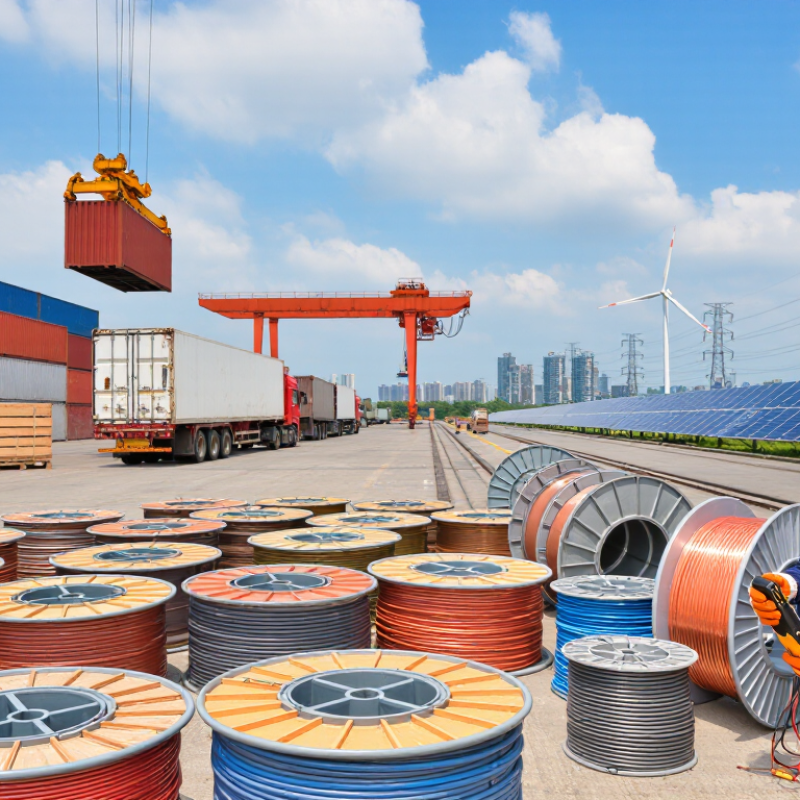
Choosing cable and wire for global sourcing can improve supply flexibility, but logistics often decide whether savings survive. Different insulation materials, conductor sizes, and packaging formats affect container space and handling costs. On a real shipment, a dense reel may use less volume than loose coils, yet require stronger lifting equipment. Small details matter. Moisture protection is essential when cargo crosses humid ports or waits in unheated warehouses. Requesting clear packing data helps freight teams calculate weight, cubic volume, and loading limits before booking.
Price comparisons should include freight, insurance, testing, duties, storage, and possible rework. A low unit price can become expensive when delivery delays stop an installation crew. Currency changes and sudden fuel surcharges also weaken fixed budgets. Quality risk deserves equal attention. Samples should be checked for conductor material, insulation thickness, markings, flexibility, and resistance values. Independent inspection is useful, especially when specifications are complex or production is unfamiliar. I once treated a supplier’s packing estimate as final; the actual pallet count was higher. That mistake was avoidable.
Tips: Use a written specification with measurable acceptance limits. Ask for photos of reels, labels, and protective packaging before dispatch. Confirm lead times at both production and port stages. Keep a small schedule buffer. It protects the project when weather, congestion, or documentation problems appear. Avoid relying on verbal promises. Record every change in writing.
| Product Category | Typical Conductor | Common Global-Sourcing Advantage | Typical Shipment Characteristics | Indicative Port-to-Port Ocean Transit | Freight Cost Sensitivity | Key Cost Drivers | Main Sourcing Risks | Recommended Risk Controls |
|---|---|---|---|---|---|---|---|---|
| Building Wire | Copper or aluminum | High production volume, standardized constructions, and relatively simple packaging support supplier comparison and consolidated purchasing. | Coils, reels, or cartons; generally dense cargo with moderate space utilization. | 25–40 days | Low to medium Freight is usually a smaller percentage of total landed cost than for lightweight products. |
Metal index, insulation compound, conductor size, packaging, duty, and inland delivery. | Conductor resistance deviations, incorrect labeling, insulation damage, moisture exposure, and regulatory non-compliance. | Use third-party inspection, verify conductor resistance, define insulation requirements, and require moisture-resistant packaging. |
| Power Cable | Copper or aluminum | Large-scale international manufacturing can provide access to high-capacity production lines and competitive raw-material purchasing. | Heavy reels or drums; high gross weight and strict handling requirements. | 25–45 days | Medium Freight and handling costs rise quickly with drum dimensions, weight, and special equipment. |
Conductor metal, insulation and sheath materials, drum size, loading method, testing, insurance, and inland haulage. | Drum damage, cable deformation, partial shipment, long production lead times, and delivery delays caused by port congestion. | Approve drum drawings, specify lifting points, use photographic loading records, reserve shipping capacity, and maintain schedule buffers. |
| Control Cable | Usually copper | Standardized conductor counts and insulation systems make technical comparison practical across qualified suppliers. | Reels, coils, or cartons; medium density with multiple configuration options. | 25–40 days | Low to medium | Number of cores, shielding, insulation material, conductor flexibility, printing, testing, and packaging. | Core identification errors, shielding defects, incorrect lay length, and documentation mismatches. | Approve samples before mass production, require core-color and marking schedules, and perform continuity and insulation tests. |
| Data and Communication Cable | Copper or optical fiber | Global sourcing may offer broad configuration options, specialized production capability, and competitive pricing for repeat orders. | Cartons, reels, or protected drums; sensitive to bending radius, compression, and electromagnetic conditions. | 25–45 days | Medium Protective packaging and quality testing can materially affect landed cost. |
Conductor or fiber grade, bandwidth category, shielding, jacket compound, testing, packaging, and certification. | Signal loss, impedance variation, excessive attenuation, crush damage, counterfeit documentation, and obsolete specifications. | Require performance testing, control bend radius, use tamper-evident packaging, and freeze technical specifications before ordering. |
| Flexible Cable | Fine-stranded copper | Specialized overseas production can reduce unit cost when volumes are stable and specifications are clearly documented. | Coils, reels, or cartons; lower packing density than rigid cable because of flexibility and protective materials. | 25–45 days | Medium to high | Fine-strand construction, conductor flexibility, jacket material, color options, minimum order quantity, and packaging volume. | Conductor breakage, jacket cracking, insufficient flex-life, dimensional variation, and higher-than-expected volumetric freight. | Define flex-life requirements, test bending cycles, inspect cross-sections, and calculate freight using both weight and cubic volume. |
| Armored Cable | Copper or aluminum with metallic armor | Suitable for projects requiring mechanical protection, with potential savings from consolidated production and bulk procurement. | Heavy drums; usually requires reinforced packaging, careful stowage, and specialized unloading. | 30–50 days | High Weight, drum dimensions, port handling, and inland transportation can significantly increase landed cost. |
Conductor metal, armor material, drum specifications, project testing, handling equipment, insurance, and inland transport. | Excessive bending, armor corrosion, drum failure, loading restrictions, project delays, and expensive replacement logistics. | Use engineering approval, conduct pre-shipment inspection, specify corrosion protection, and plan lifting and storage procedures. |
| Renewable-Energy Cable | Fine-stranded tinned copper | International sourcing can provide access to UV-resistant, weather-resistant, and high-flexibility constructions for outdoor installations. | Coils or reels; typically protected against UV, moisture, and contamination during transport. | 25–45 days | Medium | Tinned copper, UV-resistant jacket, temperature rating, connector compatibility, packaging, and project certification. | UV aging, water ingress, connector mismatch, incorrect polarity marking, and exposure to prolonged storage conditions. | Verify environmental tests, require batch traceability, protect reels from sunlight and water, and inspect connector compatibility. |
| Specialty High-Temperature Cable | Nickel-plated copper, alloy, or other specified conductor | Global sourcing may improve access to specialized materials and production technologies that are not available in every market. | Usually smaller reels or protective cartons; packaging must prevent contamination and mechanical damage. | 30–50 days | High Small shipment volumes, special materials, testing, and protective packaging increase unit logistics cost. |
Special conductor material, fluoropolymer or silicone insulation, temperature rating, testing, low-volume production, and certification. | Material substitution, incorrect temperature rating, limited supplier capacity, long qualification cycles, and difficult replacement sourcing. | Approve material certificates, qualify alternative suppliers, perform thermal testing, and maintain safety stock for critical applications. |
Related Posts
-
2026 Top Electric Cable Types You Need to Know?
-
What Are the Best Cable and Wire Suppliers in 2026?
-
2025 Guide: How to Choose the Right Electric Wire for Your Projects
-
Understanding the Basics of Cable and Wire Types for Everyday Applications
-
What is Electric Wire and Why You Need to Choose the Right Type for Your Projects
-
How to Choose the Right Cable Wire for Your Electrical Projects?