
China Top 10 Floor Duct Manufacturers for Global Buyers
China’s floor duct manufacturers are increasingly important to global HVAC sourcing. They serve commercial buildings, factories, hospitals, data centers, and large residential developments. For buyers, product quality extends beyond metal thickness. Air leakage, dimensional accuracy, corrosion resistance, acoustic performance, and installation support also influence lifecycle results.
The International Energy Agency reports that buildings consume approximately 30% of global final energy and create about 26% of energy-related emissions. These figures make efficient air distribution more than a design preference. It becomes an operational priority. Properly engineered floor duct systems can support balanced airflow, cleaner installation routes, and better space utilization. ASHRAE Standard 90.1 and Standard 62.1 also provide widely recognized guidance for energy efficiency and indoor air quality. Local compliance still requires careful verification.
This guide introduces ten China-based floor duct manufacturers for international buyers. The review considers manufacturing experience, customization capability, material options, testing practices, export history, certifications, and after-sales communication. Evidence should come from factory records, technical documents, project references, and independent verification where possible. Quality varies. A polished website is not proof of production capacity. Buyers should request samples, drawings, pressure-test data, and clear tolerances before signing contracts. Details matter.
The ranking is not universally definitive. Supplier suitability depends on climate, building codes, delivery terms, and project scale. That limitation deserves attention. Still, the selected companies offer a practical starting point for comparing Chinese floor duct suppliers and identifying partners capable of consistent international delivery.
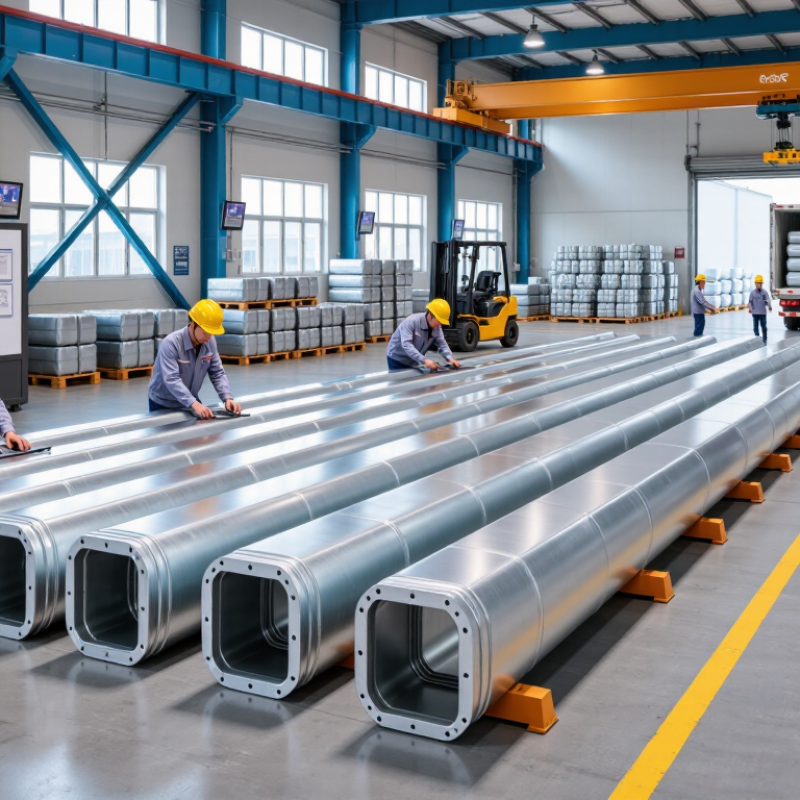
What Floor Duct Systems Are and How They Work
Floor duct systems move conditioned air through spaces beneath or within a floor. In raised-floor buildings, the cavity can act as an air plenum. Supply ducts connect this space to air-handling equipment. Floor diffusers then release cool or warm air into occupied areas. Adjustable dampers help control airflow between rooms. Some systems use metal channels embedded in concrete instead.
Air usually enters through grilles or diffusers near workstations. It rises as it warms, then returns through ceiling vents or separate return paths. This arrangement can improve comfort when airflow is balanced carefully. It also leaves wiring and service routes accessible under removable floor panels. A loose panel, however, may create noise and unwanted air leakage.
Performance depends on more than duct size. Engineers check pressure loss, insulation, moisture risk, fire separation, and cleaning access. In humid regions, uninsulated surfaces can collect condensation. That detail is easy to overlook. Acoustic lining may reduce fan noise, but it can also restrict inspection if installed poorly. Buyers should request airflow tests, material certificates, installation drawings, and maintenance instructions. Local building and fire codes still govern the final design. Real projects often need adjustments after testing, because furniture layouts and occupancy rarely match the original plan.
Key Criteria for Selecting Chinese Floor Duct Manufacturers
Selecting a Chinese floor duct manufacturer requires more than comparing export prices.
The International Energy Agency’s Buildings 2023 report states that buildings consume about 30% of global final energy. Duct leakage matters.
The U.S. Department of Energy estimates that leaky duct systems can lose 20–30% of delivered air.
Ask manufacturers for leakage-test results, pressure ratings, airflow calculations, and material certificates. Galvanized steel, aluminum, and fire-resistant polymers suit different environments. Salt exposure changes the decision.
A reliable supplier should provide clear drawings, tolerance data, load testing, and traceable batch records. Check whether production follows relevant standards, such as EN 1507 for sheet-metal duct leakage and strength.
Factory audits should include coil thickness, seam quality, insulation density, and packaging. Look closely at floor outlet covers; uneven edges can create noise and trip risks. Small detail, major consequence.
Request samples before approving mass production. A pre-shipment inspection can verify dimensions and surface protection. It cannot replace installation trials.
No checklist is perfect. Some buyers focus too heavily on certifications, while ignoring response speed, replacement parts, and after-sales documentation.
Delivery records, corrective-action reports, and independent inspection evidence often reveal more than polished sales material.
China’s Top 10 Floor Duct Manufacturers and Their Product Ranges
China’s top 10 floor duct manufacturers serve commercial, industrial, and residential projects with broad product ranges. Their core lines usually include underfloor cable ducts, PVC and metal raceways, floor trunking, and modular wiring channels. Many also produce floor boxes, junction boxes, cable grommets, access covers, and matching connectors. These supporting parts matter because an incompatible cover can delay installation.
Several manufacturers focus on heavy-duty steel systems for offices, data centers, and factories. Others supply lightweight PVC ducts for renovations and residential interiors. Their catalogs may include single-compartment, dual-compartment, and multi-compartment designs. Some offer raised-floor solutions with adjustable outlets, while others provide flush-mounted floor boxes for clean surfaces. Custom lengths, outlet positions, colors, and surface finishes are also common for overseas orders.
Practical sourcing requires more than comparing prices. Check wall thickness, load ratings, flame performance, corrosion resistance, and installation tolerances. Ask for drawings, material reports, sample pieces, and test documentation before approving production. A polished catalog is not proof of consistent quality. That deserves attention. Packaging should protect long duct sections from bending, especially during sea transport. Production capacity, inspection procedures, spare accessories, and communication speed also reveal a supplier’s reliability. Still, even a strong manufacturer may need clearer technical feedback from buyers. Product selection improves when installers explain real site problems, such as uneven floors, limited cable space, or difficult maintenance access.
Quality Standards, Certifications, and Export Capabilities
China Top 10 Floor Duct Manufacturers for Global Buyers
When comparing China’s top floor duct manufacturers, examine quality systems before reviewing prices. ISO 9001 certification can indicate controlled production, but it is not proof of every product’s performance. Ask for recent test reports covering load strength, insulation resistance, flame behavior, and dimensional tolerance. CE, RoHS, or other marks may apply, depending on the product and destination market. Verify certificate numbers with the issuing body. Documents can expire.
A capable export manufacturer should provide clear drawings, material grades, inspection records, and traceable batch information. Look for experience with steel, aluminum, PVC, or fire-rated duct systems. Export readiness also includes protective packaging, accurate HS codes, multilingual manuals, and stable lead times. Request photos of packed goods, not only showroom samples. Small details matter. Some suppliers communicate well before payment but respond slowly after production begins. That risk deserves attention.
Tips: Confirm the latest certificates before ordering. Request a sample with measured dimensions and finish details. Clarify Incoterms, warranty limits, replacement procedures, and destination-country compliance. A factory audit can reveal weak labeling, poor storage, or inconsistent welding. Price is useful, but it should not replace evidence. Even experienced buyers sometimes overlook installation conditions, especially moisture, floor loading, and cable separation requirements.
China Top 10 Floor Duct Manufacturers for Global Buyers
Quality Standards, Certifications, and Export Capabilities
This chart presents a non-company-specific 100-point evaluation framework for comparing Chinese floor duct suppliers. Quality management and product compliance receive the highest weighting because global buyers typically require documented production control, applicable testing, and market-specific conformity evidence. Export documentation, manufacturing capacity, lead-time reliability, customization, and technical support are also essential for international procurement.
The percentages are buyer-evaluation weights, not audited scores or claims about any individual manufacturer.
How Global Buyers Can Compare Suppliers and Purchase Floor Ducts
When reviewing China’s top floor duct manufacturers, global buyers should compare more than catalog prices. Request identical drawings, dimensions, material grades, and airflow requirements from every supplier. A fair comparison begins with the same specification.
Check whether ducts use galvanized steel, stainless steel, or aluminum for the project environment. Ask for load ratings, surface treatment details, fire performance documents, and dimensional tolerances. These details affect safety beneath raised floors. They also affect installation time.
A sample can reveal weak joints, rough edges, or poor coating adhesion. Small defects become expensive across a large building.
Supplier experience should be verified through factory audits, production photos, and recent export references. Review their quality plan, inspection records, packaging method, and ability to replace damaged parts.
Ask about minimum order quantities, tooling charges, lead times, payment terms, and delivery under the chosen Incoterm. Clear answers matter. Vague promises deserve a second check.
A low quotation may exclude testing, packing, or customs-related costs. Buyers should compare the full landed cost, not only the unit price.
No checklist is perfect. I would still inspect a pre-shipment batch before approving regular production. Wooden cases, moisture barriers, corner protection, and labeled bundles can prevent confusion at the construction site.
Suppliers who welcome technical questions are often easier to manage, although responsiveness alone cannot prove manufacturing quality. Periodic inspection remains necessary.
Related Posts
-
10 Essential Tips for Choosing the Best Cable Holder to Organize Your Space
-
How to Choose the Best Electric Cable Duct for Your Project?
-
Top Benefits of Using Cable Cover for Home and Office Safety?
-
What is the difference between cable and wire?
-
What is Cable Management Systems? Benefits and Best Practices Explained
-

China Top Wire Management Solutions at the 139th Canton Fair?