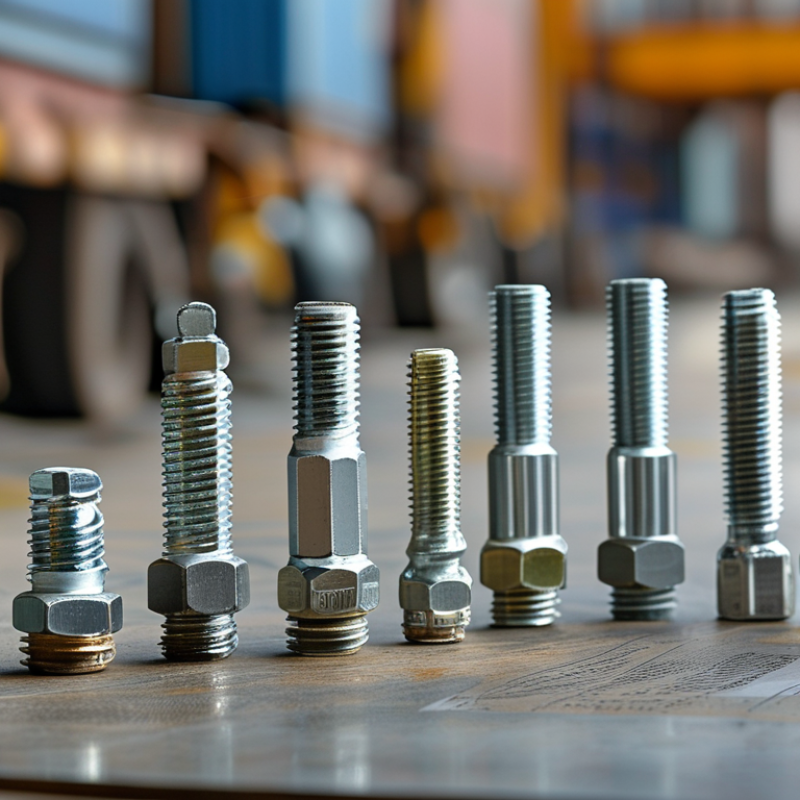
2026 Best Hex Bolt Nut Types for Global Buyers?
Choosing the right Hex Bolt Nut type in 2026 requires more than comparing prices or browsing attractive product photos. Global buyers must examine strength grades, thread systems, materials, coatings, dimensions, and documented manufacturing controls. A bolt nut used on a coastal processing line faces different demands from one installed inside a dry warehouse. Small details matter.
This guide introduces common Hex Bolt Nut options for international sourcing, including carbon steel, stainless steel, alloy steel, galvanized, and corrosion-resistant designs. It also considers metric and imperial threads, coarse and fine pitches, flange variations, locking features, and compatibility with washers and connected materials. Practical selection depends on load direction, vibration, temperature, moisture, installation tools, and maintenance access. Product certificates, inspection records, batch traceability, and clear technical drawings can help buyers reduce avoidable errors.
There is no universal best choice.
Experienced purchasing teams often confirm samples before approving large orders. A nut may fit visually but fail under repeated vibration. A coating may look uniform yet perform poorly near saltwater. Even reputable catalogs can contain outdated assumptions or incomplete specifications. This is where careful supplier communication becomes essential. Buyers should request current test data, applicable standards, packaging details, and realistic lead times. Independent inspection may also be worthwhile for critical applications. The 2026 market offers more options, but more options can create confusion. A reliable decision combines engineering judgment, verified evidence, and honest review of what remains uncertain.
Hex Bolt and Nut Families: DIN, ISO, ASME, and ASTM Standards
For global buyers in 2026, choosing a hex bolt and nut depends on more than thread size. The correct family must match the drawing, load, environment, and inspection requirements. DIN standards remain common in European machinery, with familiar metric dimensions and established tolerances. ISO standards offer broader international alignment, especially for metric hex head bolts and nuts. However, similar dimensions do not guarantee identical performance.
ASME standards are widely used for inch-based fasteners in industrial equipment. They define dimensional details, thread forms, and product requirements for hex bolts and nuts. ASTM standards focus more strongly on material grades, mechanical properties, heat treatment, and testing. For example, a project may specify an ASME dimensional standard with an ASTM material grade. That combination matters. Mixing standards casually can create fit or strength problems.
A practical purchasing review should compare head dimensions, pitch, thread tolerance, strength class, coating, and traceability. A metric bolt may fit the nut but still fail the required property class. A zinc-coated fastener may also be unsuitable near salt spray or high heat.
Check mill certificates, inspection reports, and marking consistency before shipment. Field experience shows that packaging labels can be incomplete. I have seen correct-looking cartons contain mixed lengths. That detail is easy to miss. It deserves a second inspection. For critical assemblies, confirm the complete designation, not only “hex bolt” or “hex nut.”
Strength Classes: ISO 898-1 Class 8.8 (800 MPa) to 12.9 (1,200 MPa)
For 2026 global buyers, strength class matters more than a bolt’s appearance. ISO 898-1:2013 rates Class 8.8 bolts at 800 MPa nominal tensile strength. Their nominal yield strength is 640 MPa. Class 10.9 reaches 1,000 MPa tensile strength and 900 MPa yield strength. Class 12.9 reaches 1,200 MPa and 1,080 MPa, respectively. These figures describe minimum performance targets, not guaranteed working loads. ASTM F606/F606M-24 also emphasizes tensile, proof-load, and hardness testing for mechanical fasteners.
Nut selection must follow the assembly, not the carton label. ISO 898-2:2022 defines nut property classes, including Classes 8, 10, and 12. A Class 12.9 bolt commonly requires a suitably rated Class 12 nut. Thread engagement, surface treatment, temperature, and preload still influence failure. High-strength, zinc-plated parts deserve extra care because hydrogen embrittlement can cause delayed cracking. I have seen visually perfect fasteners fail after installation.
Tips: Check the head marking and mill certificate together. Confirm the applicable ISO edition. Use calibrated torque equipment, but do not treat torque as exact preload. Friction changes with coating and lubrication. Choose Class 12.9 only when design calculations justify it; higher strength is not automatically safer. ISO 898-1 test values help comparison, but real assemblies need engineering review and sample verification.
Thread Choices: Metric Coarse, Fine, UNC, and UNF Pitch Selection
Choosing the right hex bolt nut thread begins with pitch, not appearance. Metric coarse threads suit general construction, equipment frames, and exposed assemblies. Their deeper, wider spacing tolerates dirt and minor damage during field installation. They also assemble quickly with standard tools.
Metric fine threads offer more threads per millimeter. They can improve adjustment accuracy and clamping control, especially on thin-wall parts or highly loaded joints. However, fine threads need cleaner handling and careful alignment. I have seen installers force a fine-thread nut onto a coarse bolt. It felt acceptable for two turns, then damaged both parts. That mistake is expensive.
UNC threads are common for general inch-based applications, while UNF threads provide finer pitch and better adjustment. UNF can support stronger preload in suitable materials, but it may be less forgiving in dirty environments. Buyers should match the bolt, nut, washer, material, and tightening method as one system. Check nominal diameter, pitch, tolerance class, thread length, and gauge results before shipment. Do not rely on a thread label alone.
Small details matter. A 12 mm bolt with a 1.75 mm pitch is not interchangeable with a 1.5 mm pitch. The nut may start, but engagement will be unsafe. I once underestimated coating thickness during a purchasing review. The measured pitch was correct, yet the assembled fit was poor. Allowance for surface treatment deserves a place in every specification.
Coatings and Corrosion: ISO 10683 Zinc Flake and ASTM B117 Testing
2026 Best Hex Bolt Nut Types for Global Buyers?
For global buyers, zinc flake coatings deserve close attention. ISO 10683 covers non-electrolytically applied zinc flake systems for fasteners. These coatings protect steel through barrier action and sacrificial corrosion protection. They also avoid hydrogen embrittlement risks linked with some electroplating processes. That matters for high-strength hex bolts. Check coating class, thickness, thread coverage, and friction performance. A clean thread is not enough.
ASTM B117 exposes coated parts to a controlled salt fog environment. It helps compare samples under consistent laboratory conditions. However, salt-spray hours do not equal real service years. The ASTM method itself does not define universal field-life predictions. Humidity, road salt, temperature cycling, and trapped water can change results sharply. No test is perfect. Treat impressive hours carefully.
The NACE IMPACT study estimated global corrosion costs at about 2.5 trillion US dollars annually, equal to roughly 3.4% of global gross domestic product. This figure explains why coating selection deserves engineering review, not only price comparison. Buyers should request test reports, coating identification, lot traceability, and torque-tension results. Inspect exposed threads and washer contact areas, where coating damage often begins. One practical weakness remains: suppliers may report ASTM B117 results without describing coating thickness or preparation. That omission deserves questions before approval. (Sources: ISO 10683; ASTM B117; NACE IMPACT Study)
2026 Best Hex Bolt Nut Types for Global Buyers
Zinc flake coating systems aligned with ISO 10683 are commonly selected for high corrosion resistance on fasteners. The ASTM B117 hours below represent typical procurement target levels for neutral salt-spray testing and are not universal requirements of either standard.
Typical zinc flake systems use a zinc-aluminum base coat with an optional sealer or topcoat. Actual ASTM B117 performance depends on coating thickness, pretreatment, fastener geometry, curing, test procedure, and the agreed acceptance criteria.
Global Buyer Checklist: Size, Torque, Traceability, and ISO 898-2 Nut Matching
For global buyers, hex bolt selection starts with size, thread pitch, and mating nut class. ISO 898-2:2022 defines mechanical requirements for metric nuts, including proof-load testing and property classes. A class 10 nut should match the bolt’s strength level, not merely its diameter. Check the thread system, tolerance, bearing surface, and minimum engagement length. A 12 mm bolt with the wrong pitch can look correct and still fail during assembly.
Torque needs measured evidence. The common formula, T = KFd, is only an estimate because coating, lubrication, and surface roughness change the friction factor. ISO 16047 evaluates tightening torque and clamp force, while ASTM F606/F606M covers mechanical testing methods for fasteners. Ask for test results, not only a target torque value. In factory trials, record torque, angle, lubricant condition, and actual preload. Small details matter. I have seen “standard” torque tables create inconsistent clamp loads.
Traceability should reach the production lot. Request material certificates, heat numbers, dimensional reports, hardness results, and nut proof-load records. ISO 9001-based controls can support document consistency, but certification alone does not prove every shipment. Match the nut marking, property class, thread tolerance, and certificate data. This step is sometimes skipped under delivery pressure. That is a weakness. Recheck the documents against samples before approving a large order.
| Hex Nut Type / ISO Reference | Typical Application | Metric Size Range | Recommended Matching Bolt | Nut Property Class (ISO 898-2) | Minimum Proof Stress | Common Thread Standard | Traceability and Inspection Checklist |
|---|---|---|---|---|---|---|---|
| Standard Hexagon Nuts for General Mechanical Assembly | |||||||
| Style 1 Hex Nut ISO 4032 / DIN 934 equivalent dimensions | General machinery, fabricated assemblies, equipment frames, and maintenance applications. | M5–M64 | Class 5 nut with class 5.8 bolt Class 8 nut with class 8.8 bolt Class 10 nut with class 10.9 bolt | 5, 8, 10, 12 | 500, 800, 1,000, 1,200 MPa | ISO metric coarse thread; fine thread available by order. | Verify size, pitch, nut class, heat or lot number, dimensional report, coating specification, and mechanical test report. |
| Thin Hex Nut ISO 4035 | Locknut arrangements, adjustment assemblies, and locations with limited axial space. | M5–M64 | Use with a compatible full-height nut or as specified by the engineering design; do not assume thin nuts provide full bolt capacity. | Typically 04, 05, or 10 depending on specification | Depends on specified class and size. | ISO metric coarse or fine thread. | Confirm reduced height, thread engagement, applicable property class, mating-nut arrangement, and installation sequence. |
| High-Strength Hex Nut ISO 898-2 property class 10 or 12 | High-preload joints, structural equipment, heavy machinery, and high-strength bolt assemblies. | M6–M48 | Class 10 nut with class 10.9 bolt Class 12 nut with class 12.9 bolt | 10 or 12 | 1,000 or 1,200 MPa | ISO metric coarse thread; fine thread must be separately specified. | Check manufacturer lot traceability, heat-treatment records, proof-load results, hardness, thread gauges, and marking compliance. |
| Prevailing-Torque All-Metal Nut ISO 2320 | Joints exposed to vibration, temperature cycling, or repeated service loads where a prevailing torque feature is required. | M5–M39 | Match bolt strength class, thread tolerance, temperature range, and reuse requirements. | According to the specified ISO 898-2 class | According to selected property class. | ISO metric thread; prevailing torque performance must be specified and tested. | Request prevailing-torque values for first and fifth installation, temperature rating, reuse limit, coating compatibility, and batch test records. |
| Non-Metallic Insert Lock Nut ISO 7040 / ISO 7042 where applicable | General vibration-resistant assemblies operating within the insert temperature limits. | M3–M30 | Use with a bolt of suitable strength and with adequate thread protrusion through the insert. | Specified by product standard and size | According to selected nut class. | ISO metric coarse or fine thread. | Verify insert material, maximum service temperature, prevailing torque, reuse policy, lot identification, and chemical compatibility. |
| Flange Hex Nut ISO 1661 / applicable product specification | Assemblies requiring an integrated bearing flange to distribute load and reduce the need for a separate washer. | M5–M20 | Match bolt property class, flange bearing diameter, and surface hardness to the joint design. | Typically 8 or 10 | 800 or 1,000 MPa | ISO metric coarse thread unless otherwise specified. | Inspect flange diameter, concentricity, bearing face, thread gauge results, coating thickness, and lot traceability. |
| Recommended Metric Sizes, Standard Across-Flats Dimensions, and Indicative Torque | |||||||
| M6 Hex Bolt and Nut | Small equipment, guards, brackets, and light-duty machine assemblies. | M6 × 1.0 | Class 8.8 bolt with class 8 nut | 8 | 800 MPa | Across flats: 10 mm Nominal tensile stress area: 20.1 mm² | Indicative tightening torque: 13.5 N·m using K = 0.20 and approximately 70% proof-load preload. |
| M8 Hex Bolt and Nut | General equipment, frames, machine covers, and medium-duty connections. | M8 × 1.25 | Class 8.8 bolt with class 8 nut | 8 | 800 MPa | Across flats: 13 mm Nominal tensile stress area: 36.6 mm² | Indicative tightening torque: 20.5 N·m using K = 0.20 and approximately 70% proof-load preload. |
| M10 Hex Bolt and Nut | Machine structures, brackets, conveyors, and general industrial assemblies. | M10 × 1.5 | Class 8.8 bolt with class 8 nut | 8 | 800 MPa | Across flats: 16 mm Nominal tensile stress area: 58.0 mm² | Indicative tightening torque: 65 N·m using K = 0.20 and approximately 70% proof-load preload. |
| M12 Hex Bolt and Nut | Heavy equipment, structural machine joints, bases, and support assemblies. | M12 × 1.75 | Class 8.8 bolt with class 8 nut | 8 | 800 MPa | Across flats: 18 mm Nominal tensile stress area: 84.3 mm² | Indicative tightening torque: 142 N·m using K = 0.20 and approximately 70% proof-load preload. |
| M16 High-Strength Hex Bolt and Nut | High-load machinery, industrial structures, lifting equipment, and preloaded joints. | M16 × 2.0 | Class 10.9 bolt with class 10 nut | 10 | 1,000 MPa | Across flats: 24 mm Nominal tensile stress area: 157 mm² | Indicative tightening torque: 352 N·m using K = 0.20 and approximately 70% proof-load preload. |
| M20 High-Strength Hex Bolt and Nut | Heavy industrial frames, power equipment, large machine bases, and structural connections. | M20 × 2.5 | Class 10.9 bolt with class 10 nut | 10 | 1,000 MPa | Across flats: 30 mm Nominal tensile stress area: 245 mm² | Indicative tightening torque: 686 N·m using K = 0.20 and approximately 70% proof-load preload. |
| M24 High-Strength Hex Bolt and Nut | Large structural machinery, heavy foundations, transport equipment, and high-load assemblies. | M24 × 3.0 | Class 12.9 bolt with class 12 nut, only where the joint design permits this strength level | 12 | 1,200 MPa | Across flats: 36 mm Nominal tensile stress area: 353 mm² | Indicative tightening torque: 1,425 N·m using K = 0.20 and approximately 70% proof-load preload. |
| Global Buyer Acceptance Checklist | |||||||
| Dimensional Verification | Confirm nominal diameter, pitch, thread tolerance, nut height, across-flats dimension, chamfer, bearing face, and gauge inspection results against the purchase specification. | ||||||
| Nut-to-Bolt Strength Matching | For standard high-strength assemblies, commonly match a class 8 nut with an 8.8 bolt, a class 10 nut with a 10.9 bolt, and a class 12 nut with a 12.9 bolt. The final selection must follow the joint design, applicable standard, and engineering approval. | ||||||
| Torque Control | Torque is affected by thread and bearing friction, lubrication, coating, washer use, installation speed, and tool accuracy. The values above are indicative calculations only; use a validated torque-tension procedure for production tightening. | ||||||
| Coating and Corrosion Protection | Specify coating type, nominal coating thickness, corrosion-resistance requirement, hydrogen-embrittlement controls where relevant, friction coefficient range, and compatibility with the bolt and washer system. | ||||||
| Traceability Documents | Request a certificate of conformity, material or heat number, production lot number, mechanical test results, hardness results, dimensional inspection report, coating report, and applicable third-party or laboratory test evidence. | ||||||
| Marking and Packaging | Check manufacturer identification where legally required, property-class marking, batch or lot identification, package labels, quantity, country-of-origin information, and protection against mixed sizes or mixed property classes. | ||||||
| Technical note: Metric tensile stress areas and indicative torque values are rounded reference figures for standard coarse threads. Always verify the current edition of the applicable ISO standard and the project-specific engineering requirements before purchasing or installing fasteners. | |||||||